
Before you even spend a rupee or dollar on marketing, staffing, or scaling operations – you have to answer one very basic question first.
How many customers do I need to break even?
The answer to this lies in your break-even analysis.
The Break-Even Analysis is the most pragmatic tool when it comes to startup finance modeling. It gives you an exact point beyond which all your revenues will equal your costs – this means you won’t be losing money anymore, but won’t be making any profit either. All of the activity beyond this point becomes pure profit for you.
And all of the activity below this point is your loss.
While most entrepreneurs skip doing their break-even analysis in a rush to start growing, not doing so is like speeding without knowing where your destination is.
This article will cover everything you ever wanted to know about the Break-Even Analysis.
What Is Break-Even Analysis?
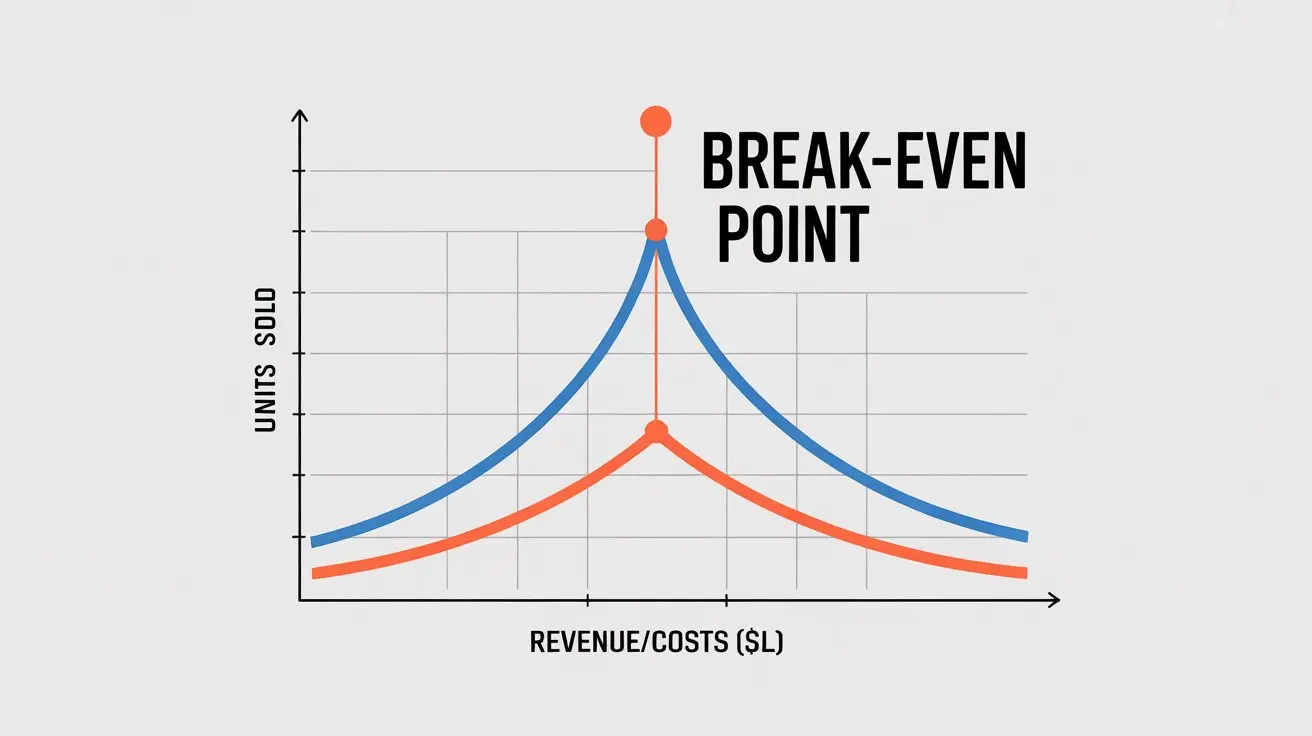
The break-even analysis is a financial computation method used to calculate the precise point where your total revenue matches your total costs, thus breaking even.
At this point:
- You do not earn any profits
- You do not incur losses
- Each unit sold above this point represents real profit
While it seems easy enough, knowing the BEP makes you view pricing strategies, staffing considerations, marketing expenditures, and growth objectives in a new light.
The break-even analysis helps answer three crucial questions:
- How many units should I sell to meet my expenses?
- How much revenue do I require monthly to break even?
- What happens when I adjust prices or costs?
Why Break-Even Analysis Matters for Startups
For new businesses, every month spent before reaching the point of profitability is a month spent consuming either personal savings, invested capital, or money that was raised through loans. Therefore, the closer you can be to pinpointing your exact time to break-even, the more focused goal you will be able to establish.
If you are running your startup on personal funds without any outside financing, this information is particularly important. In cases like these, there is no room for spending money for years without expecting returns, and you should aim at reaching break-even as soon as possible.
From the investor’s perspective, the ability to provide a break-even point will prove that you are financially mature and aware of your unit economics. In addition to being crucial in your pitch deck, this information is among the most analyzed data points in your financials.
If you’re relying on personal funds, understanding bootstrapping a startup becomes essential to manage your cash wisely.
Key Terms You Need to Understand First
Before delving into the equation itself, let’s understand what these three terms mean:
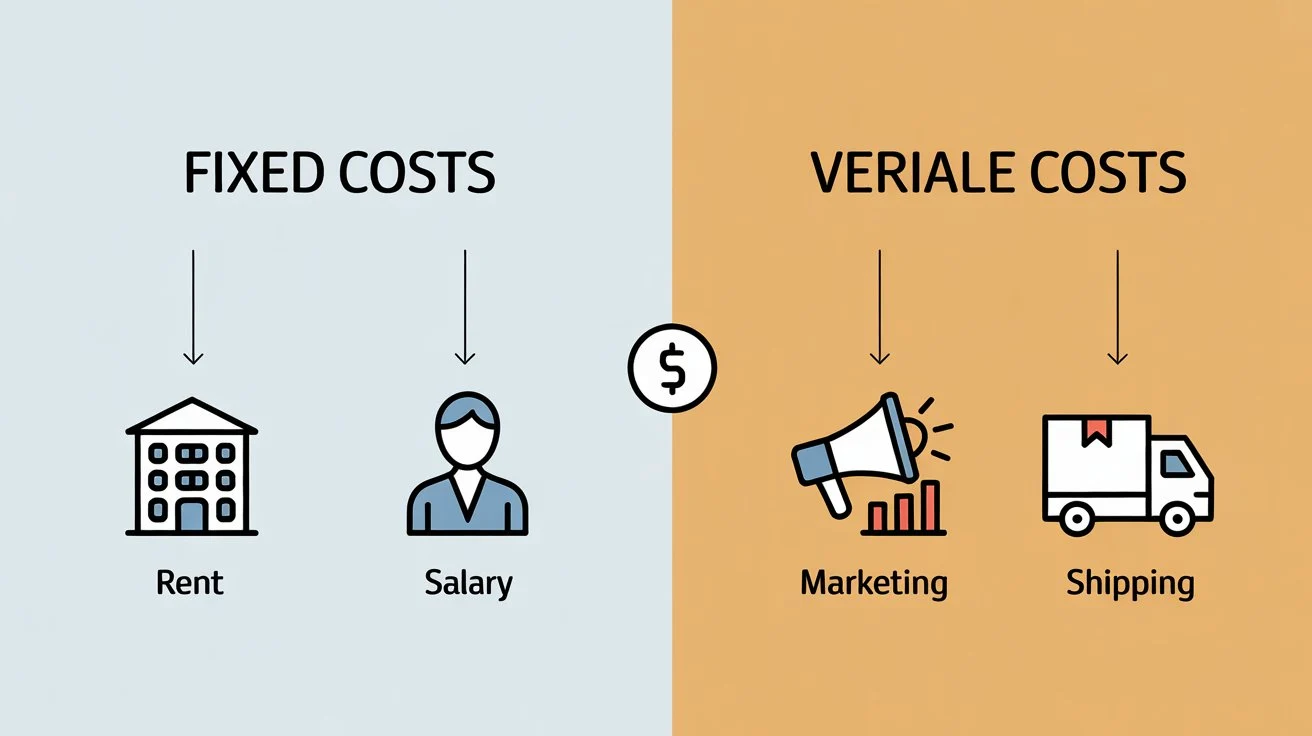
Fixed Costs Fixed costs are those costs which do not vary depending upon the sales volumes. Whether you have zero customers or one thousand, these expenses will be the same.
Example:
- Rent for office space
- Employee salaries
- Software licenses
- Insurance
Variable Costs Variable costs are those which depend upon production volume or sales volume. The more the number of customers, the greater the variable costs.
Example:
- Costs of transaction processing
- Cost of material or inventory
- Transportation charges
- Charges of freelancers per project
Contribution Margin Contribution margin is the amount by which each sale helps to cover the fixed costs once the variable costs have been subtracted.
Contribution Margin = Selling Price – Variable Cost Per Unit
The Break-Even Formula
The two formulas for calculating break-even point are dependent on what exactly one wishes to find:
Break-Even Point in Units:
To calculate how many units need to be sold, use the following formula:
Break-Even Units = Fixed Cost ÷ Contribution Margin
Break-Even Point in Sales:
If you want to determine the required revenue, apply this formula instead:
Break-Even Sales = Fixed Cost ÷ Contribution Margin Ratio
In Which:
Contribution Margin Ratio = Contribution Margin ÷ Selling Price
Break-Even Analysis: Real Startup Example
Let’s go through an example together.
Example: SaaS Startup
Fixed Monthly Cost: $3,000 (wages, software, rent)
Price Point: $49/month per client
Cost Per Client: $9 (payment fees, software for customer support)
Step One – Determine Contribution Margin:
$49 – $9 = $40 per client
Step Two – Determine Break-Even Units:
$3,000 / $40 = 75 clients
The business will need to acquire 75 paying clients in order to break even every month.
Step Three – Determine Break-Even Sales:
75 x $49 = $3,675/month
This means that once the company reaches $3,675 in monthly recurring sales, it starts making a profit. And every client after 75 brings in $40 in profit.
It’s important to know this number. It allows the founder to set a concrete goal to pursue.
Break-Even Analysis for Different Business Models
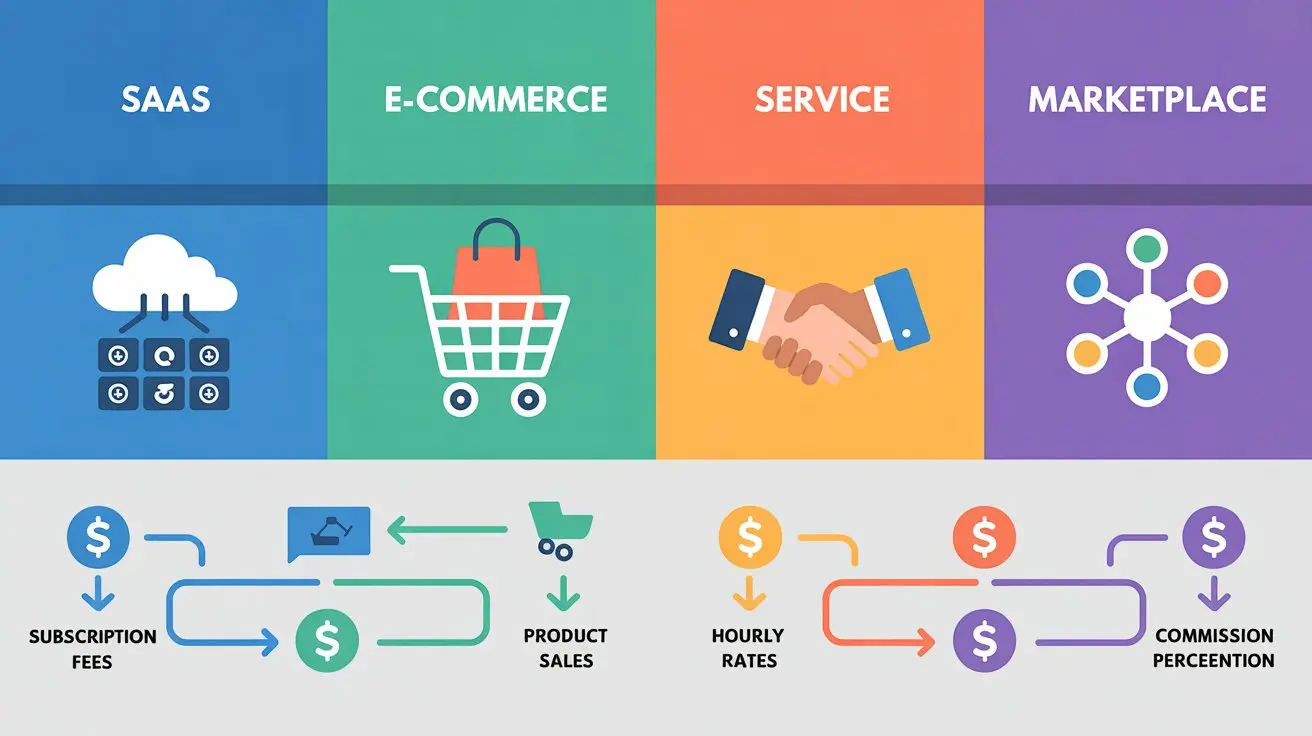
Break-even calculation varies based on the type of business you operate. Below is how to calculate your break-even point for different types of businesses:
SaaS/Subscription-based business
Your variable costs should be low and fixed costs high for your break-even. You will break even when your MRR (monthly recurring revenue) equals or exceeds the total fixed and variable monthly expenses incurred by your business. Note that if you are losing customers monthly due to churn, your active number of clients will be fewer than the total number of sign-ups.
E-commerce/Product-based business
Variable costs here include costs of goods sold (product cost), packaging, and shipping. Your contribution margin per order must be high enough to cover fixed costs at reasonable sales volumes. A small margin per order will result in extremely high break-even units, which is a red flag.
Service business/Agency
Here, most of your fixed costs will come from salaries and office space while variable costs will be minimal. Break-even calculation simply involves the number of clients you require in order to pay off salaries..
Marketplace / Platform
You earn a percentage of each transaction. Your variable cost is near zero, but your fixed costs (tech, team) are high. Break-even is about transaction volume — how many transactions at what average value cover your fixed base.
How to Lower Your Break-Even Point
Once you’ve figured out your break-even number, the next question is obvious: how do you hit it faster? Or lower it so it’s easier to hit?
There are only three levers to pull:
- Raise Your Prices The higher the price, the higher the margin, and the fewer units you need to sell to break even. Just a 10-15% increase could make an enormous difference for your break-even point. That’s why your pricing strategy should be carefully considered.
- Lower Variable Costs Get better rates on transaction processing. Find less expensive tools. Lower cost of goods. Every cost reduction that goes into variables reduces your break-even point.
- Lower Fixed Costs Drop those unnecessary subscriptions. Put off hiring. Work from home and save on rent. A reduction in your fixed costs will help you lower your breakeven point.
The perfect combination is all three levers – slightly higher prices, slightly lower variable costs, and a focus on fixed costs.
Break-Even Analysis and Financial Projections
It is important to note that break-even analysis is never done in a vacuum. It is a key input into your financial projections for startups.
As you construct your financial projections over a 12-month period, the break-even analysis will help you identify:
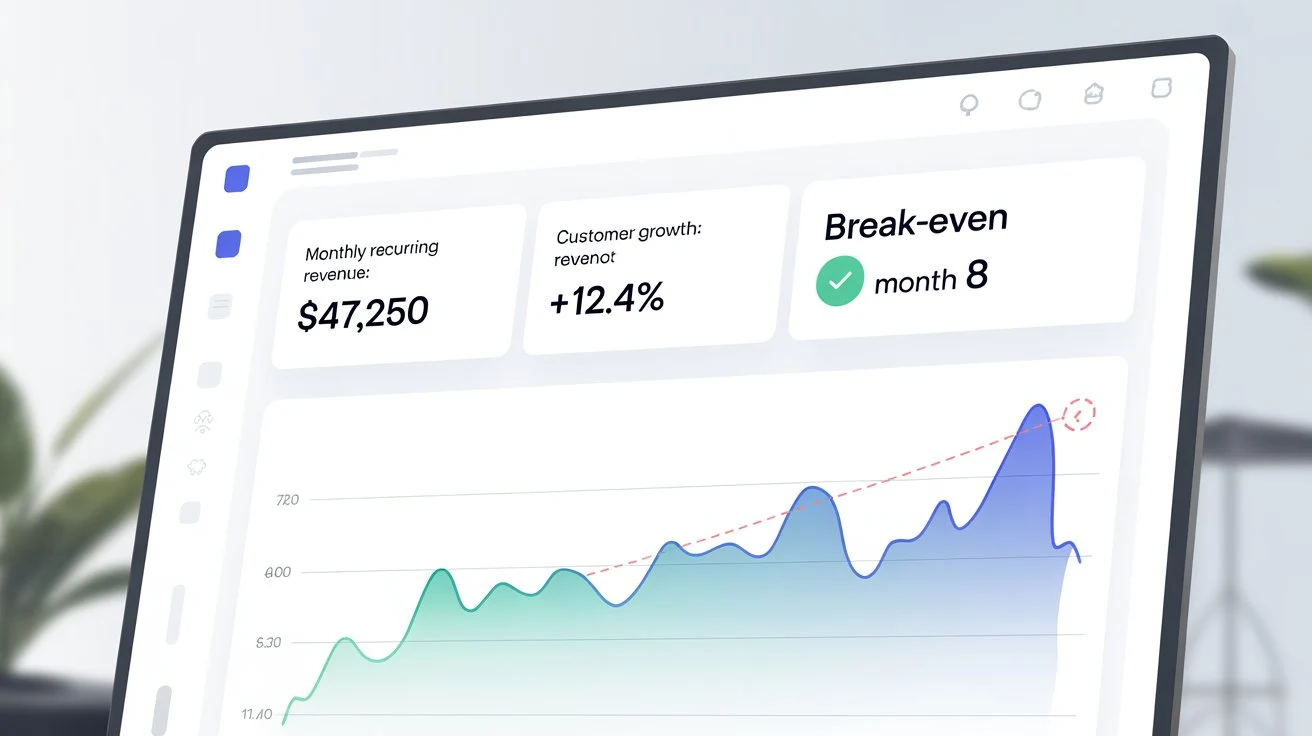
- The month when you break even
- Your sensitivity to changes in prices or costs
- The growth rate required to ensure that you break even on a realistic timeline
Your financial projections are immediately followed by questions such as “When do you break even?” from investors. If you cannot accurately answer this question, along with a clear rationale, your financial projections are meaningless.
First create your break-even analysis and then incorporate it into your financial projections framework.
Limitations of Break-Even Analysis
Although break-even analysis is an excellent tool, it is far from being flawless. Here is what it fails to consider:
The analysis is done on the assumption of static costs. While fixed costs remain constant at low levels of production, the larger you scale up your operations, the higher those expenses get as you add employees, better equipment, new tools. Consequently, the point of break-even becomes dynamic along with the growth of your company.
The calculation of break-even doesn’t take into consideration the timing of payments. For example, you have reached the break-even point, meaning you made enough sales. But since your customers pay on a monthly basis while you need money right away, chances are, you will still go bankrupt. Thus, cash flow projection should be considered separately.
All customers are viewed as equal by break-even analysis. As we already know, there are one-time customers as well as loyal clients. This is why combining LTV calculation with break-even is necessary.
In conclusion, it should be said that the break-even point is just a figure. How this number will affect the pricing policy and growth strategy of your company is another question.

Common Mistakes Founders Make
Ignoring Variable Costs. Founders who calculate their break-even assume that fixed costs are all that matter. You can’t calculate your break-even without taking into account processing charges, delivery costs, or even support per customer. Your break-even calculation will be incorrect – and lower than expected.
Failing to recalculate as you scale. What worked last month won’t necessarily work next month. Recalculating your break-even point every quarter, at least, is important as you grow your staff and your technology and adjust prices.
Confusing break-even and financial health. Breaking-even does not guarantee profit and success. Rather, it’s merely a starting point. You should consider it only as such.
Calculating your annual rather than your monthly break-even. Startups in their early days don’t benefit as much from calculating an annual break-even as a monthly one.
Break-Even Analysis for Investors and Pitch Decks
While you are getting ready for the fundraising process, your break-even analysis must be evident in your financial projections as well as in your investor pitch decks.
Show your investors:
- Your present monthly fixed and variable cost structure
- Contribution margin per customer
- Break-even unit number and revenue goal
- Month in which you hope to achieve break-even in your financial projection
- Assumptions behind the above projection
Such clarity indicates that you know your business model thoroughly – not only its vision but also the economics behind it.

Conclusion
A break-even analysis is one of the most fundamental exercises for an entrepreneur to undertake. It strips away the extraneous information and gives you precisely what you need to make it through.
Determine your fixed costs. Know your costs per transaction. Figure out your contribution margin. Divide. The result – your break-even point – will become one of the most crucial checkpoints in your venture’s path.
From there, apply it to hone your prices, control your costs, and set attainable growth objectives in your financial forecasts. For a lean operation, utilize it to direct your bootstrapping approach. And once you’re ready to raise funds, allow it to ground the data in your pitch deck.
Know your number. Work towards it. Everything else falls into place after that.