
The main reason for a failure of the start-up is the lack of funds – something that no one sees coming.
For precisely that reason, the creation of financial projections for the start-up cannot be an optional process. Regardless of whether the company is trying to raise money or is self-funded, financial projections will help see the future trajectory and the runway of the start-up.
Nonetheless, founders often ignore financial projections altogether or create those that might be looking good but are completely unrealistic.
In this post, we will talk about the process of creating financial projections for a start-up and provide all the necessary tools for making sure that those projections are based on real-world numbers.
What Are Financial Projections for Startups?
Projections for startups are future-based expectations of how your startup will perform from a financial point of view. This is done based on an estimated timeline, which could be either one year, three years, or five years.
The assumptions that projections are based on include:
- Number of customers
- Price charged
- Cost involved in operations
- Growth rate
It should be noted that projections do not have to be accurate. These are logical guesses on paper based on reasonable assumptions. A sound projection will present you with a story in numbers – this is where we are, this is what we plan to build, and this is what happens if our assumptions play out.
The four essential elements of projections for startups include:
- Revenues
- Expenses
- Cash flow forecast
- Profit and loss statement
Why Financial Projections Matter More Than You Think
Many founders regard financial projections as something that they develop for their investors and put aside.
Decision making: Financial projections make founders critically assess their business models. While trying to develop a revenue model, founders can immediately understand whether their pricing strategy makes sense or whether their customer acquisition cost is unreasonably high.
Attracting investment: Any professional investor would not invest money into startups without a proper financial model. The projections must reflect a clear road to profitability and reasonable assumptions. Moreover, they must be connected directly with a pitch deck.
Bootstrapping: In case founders are bootstrapping their companies, the importance of projections only increases. Without external capital, any mistake can be costly. Knowing the break-even point and burn rate becomes crucial for survival.
Risk management: Projections can help founders avoid potential hazards. In case founders find that their companies will face a lack of cash flow by month 8, they can change their prices, reduce expenses, or speed up sales.
Moreover, they must be connected directly with a pitch deck. You can explore a ready-to-use pitch deck template to align your financial projections.

Key Components of Financial Projections
1. Income Projections
Revenue projections calculate the amount of money your startup will make in a certain period of time.
Basic equation:
Revenue = # of Customers * $/Customer
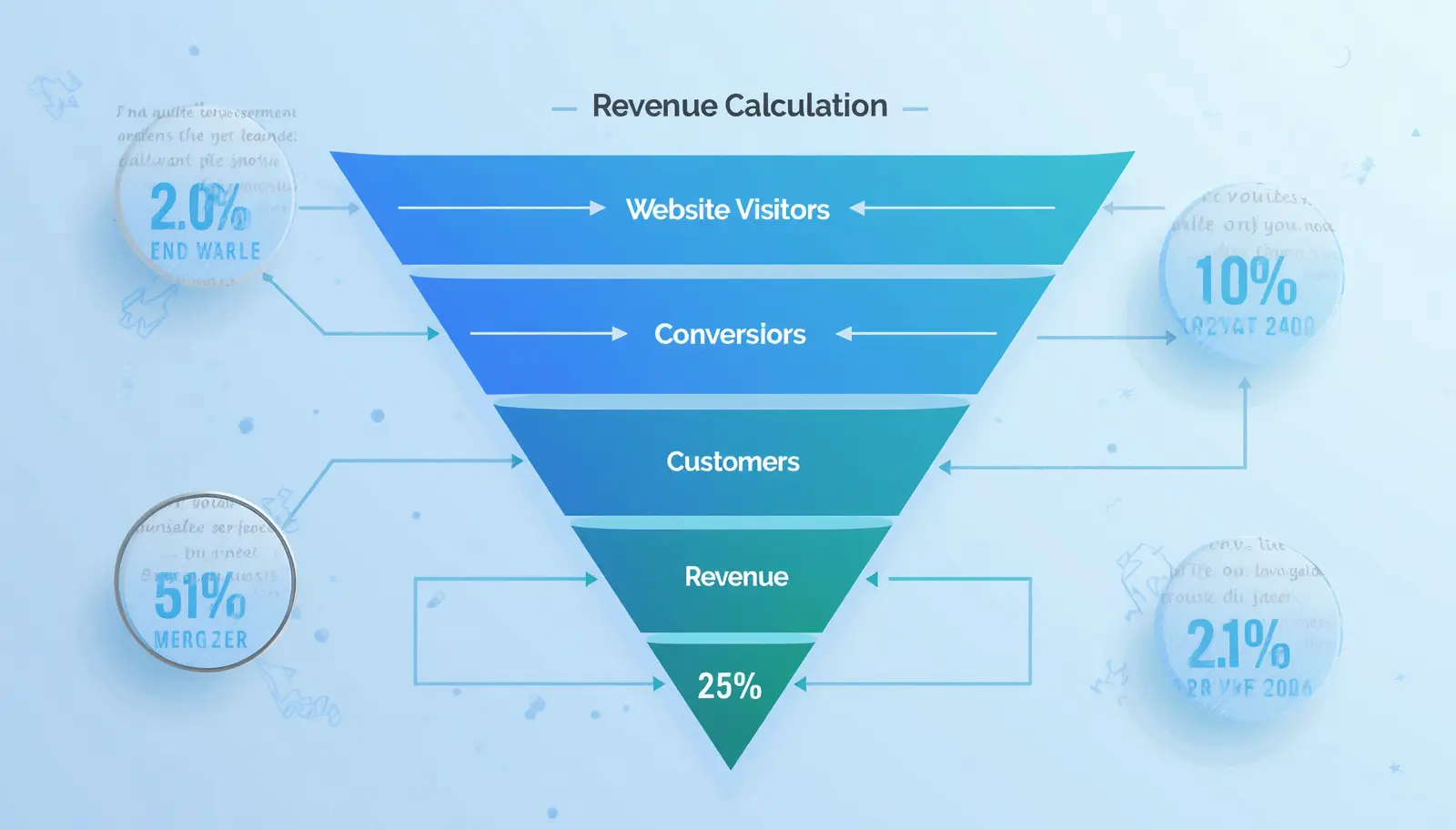
However, to calculate that, you have to break down the process into stages:
- How many visitors do you attract to your website or your offer?
- How many of those become customers (conversion rate)?
- How much, on average, do they spend on you?
Example:
- 2,000 visits per month
- 4% conversion = 80 customers
- $49 per month for average customer
- Total monthly revenue = $3,920
However, after the first month, if you increase traffic by 10% monthly, the numbers will compound quickly. Calculate them month by month, don’t just annualize.
Also, take into consideration:
- Churn rate – how many of the existing customers leave monthly
- If you offer various packages with different prices
- Seasonality if your business is seasonal
2. Expense Projections
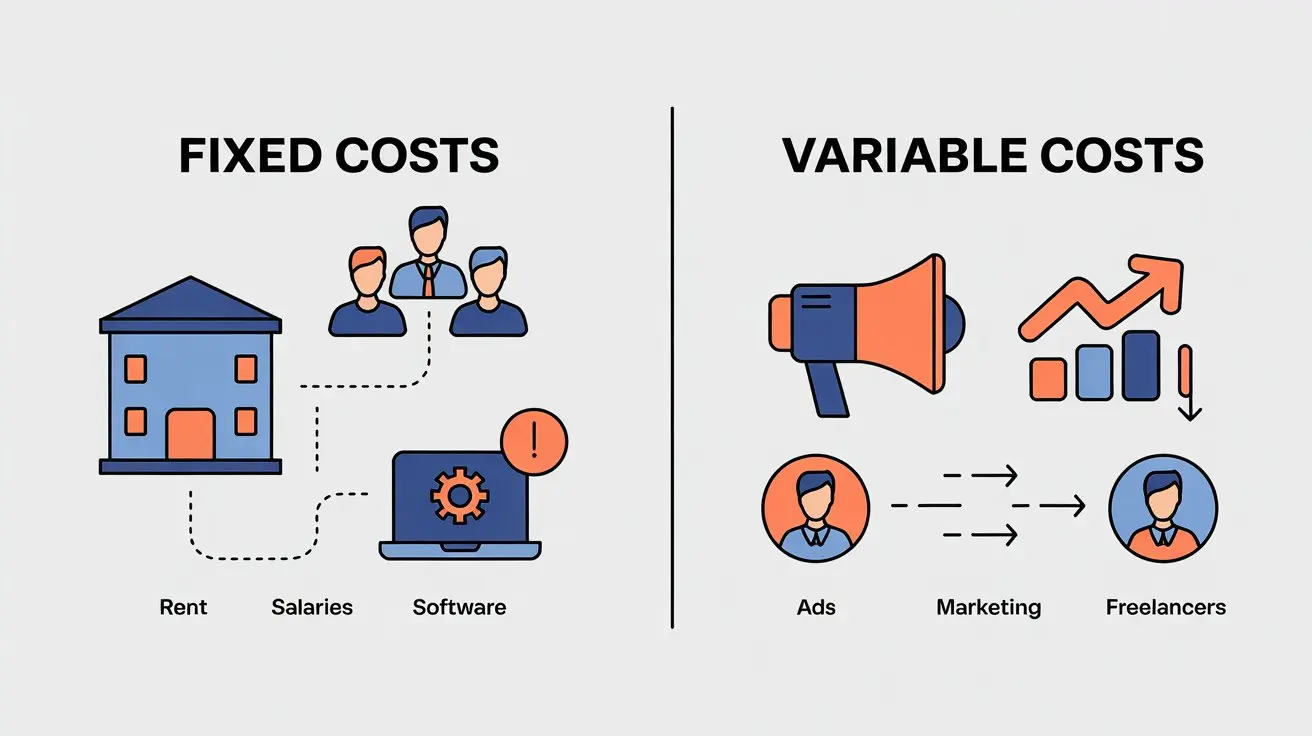
In any start-up business, there are two categories of expenses: fixed and variable.
Fixed expenses do not change according to the level of income produced:
- Salaries and wages
- Rent office/office co-working space
- Cost of software subscriptions
- Insurance payments
Variable expenses depend on the level of activity of the business:
- Advertising costs
- Fee for payment processing
- Customer service expenses
- Payments to contractors or freelancers
The biggest mistake that founders make when calculating expenses is underestimating. In their plans, they only include those expenses they are aware of, ignoring all others such as financial and legal consulting, compensation for customers, training, etc.
To calculate total expenses, list all known expenses, and add an additional 15-20%. It is always more beneficial to overestimate than to underestimate.
3. Cash Flow Projection
Cash flow should not be confused with profit. A company can be profitable but bankrupt due to bad management of cash flows.
Cash flow shows at what time money comes into and leaves the company’s bank accounts.
Cash Flow = Cash Inflows − Cash Outflows
Important aspects to keep track of include:
- How often do clients pay? (Once upfront? Monthly? On a Net-30 basis?)
- What are the dates of your bills payable?
- Any big expense you might incur in the near future?
Create a cash flow projection for at least twelve months. Focus particularly on months that will require extra spending – recruiting, purchasing new equipment, conducting a huge marketing campaign. Ensure that you have enough cash reserves for such moments.
If a certain month in your cash flow projection comes out negative, you might have a problem on hand. In this case, either generate more income beforehand, establish a line of credit, or revise your expenditure plan.

4. Profit & Loss Projection
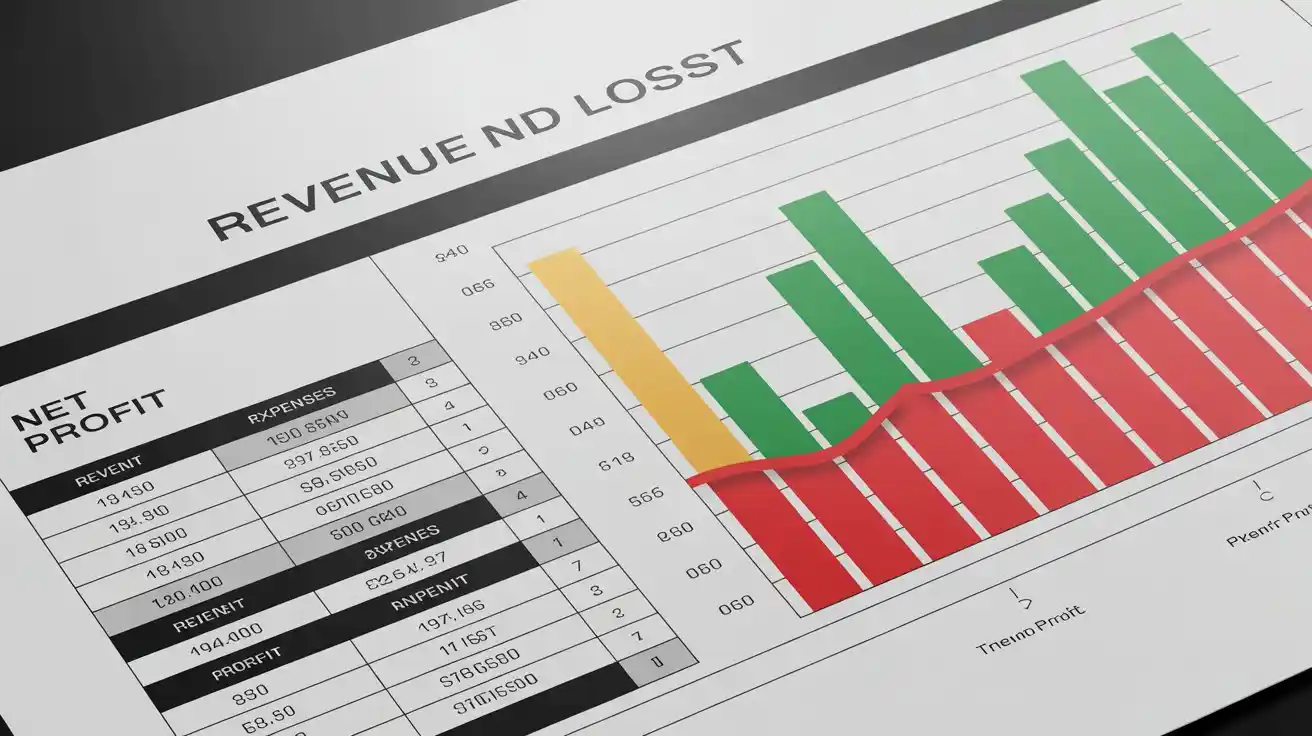
The profit and loss statement highlights how your company performed financially within the period:
Net Profit = Gross Revenue − Total Expenses
In the beginning, when you’re still running an early stage startup, a net loss per month will be common and expected. Both investors and the founders should care about whether there’s a positive trend towards profitability.
Include in the P&L projection:
- Gross Revenue
- Cost of Goods Sold
- Gross Profit
- Operating Expenses
- Net Profit / Net Loss
Show the figures monthly for year one and quarterly for years two and three.
How to Build Financial Projections Step by Step
Step 1 — Define Your Assumptions
The first step in all financial modeling begins with assumptions. Write them down:
- What is your monthly growth rate?
- What is your average selling price?
- What is your churn rate?
- What is your marketing budget?
Assumptions drive everything. If your assumptions are flawed, then your entire business model fails. Base your assumptions on hard data whenever possible – industry standards, competitive analysis, or your own early metrics.
Step 2 – Create your Revenue Model
Utilize the following equation: Traffic x Conversion Rate x Price. Do this on a monthly basis for a minimum of 12 months. The power of growth assumptions and the magic that happens when you tweak conversion rates and pricing will amaze you.
Step 3 – List Out All Expenses
Do this by category. No exceptions. Separate startup expenses from monthly expenses.
Step 4 — Build Your Cash Flow Forecast
Consider when cash is tight during the month by plotting income and expenditures on the timeline.
Step 5 – Develop Three Scenarios
Do not project just one scenario. Think of three scenarios that represent:
- The Base Case – Most likely scenario for you to be realistic
- The Best Case – When all goes well beyond expectations
- The Worst Case – When things will move slower or there would be more costs
Developing a few alternative scenarios is important for your investors as they see how critical you have analyzed the risks. Besides, it helps you to create a plan in case things will develop differently from the projections.
Financial Projections for Investors
While preparing projections for the investment round, the numbers themselves are essential; however, equally important is the narrative.
What investors look for:
- Realistic assumptions backed up by hard numbers, not fantasies
- Path to profitability with a specific timeframe
- Unit economics – CAC vs LTV
- Scalability of the business
Your financial projections should match your pitch deck and demonstrate how you achieve your targets mentioned in the deck precisely.
Avoid hockey-stick projections without explanation. If you’re projecting 300% growth in month six, explain why. What changes? What’s the catalyst? Show the logic.
Financial Projections for Bootstrapped Startups
Whereas the goal of the financial projections when raising capital is to appeal to the investor, the goal when bootstrapping is to sustain yourself and your business. The focus must be on:
- Break-even analysis – precisely how many customers do you need to breakeven
- Minimum viable revenue – how low can the company’s revenue go before becoming unsustainable?
- Burn rate – how much you’re burning through savings and retained earnings per period?
- Payback period – at what point does each new customer start generating positive cash?
As a bootstrap CEO, you have no choice but to conserve cash. Your financial model must incorporate lean principles as early and frequently as possible.
In case founders are bootstrapping their companies, the importance of projections only increases. Learn more about bootstrapping a startup and managing finances without external funding.

Financial Projection Pitfalls to Watch Out For
Overoptimistic growth projections. It never happens as soon as you think. Make sure your growth assumptions are conservative.
Underestimated expenses. Founders systematically underestimate expenses. Build in some cushion.
Failure to consider the timing of cash flows. Remember that profit does not mean cash! Every cash transaction must be modeled.
Not revising projections periodically. If your projections were made in the first month, then they need to be updated every quarter.
Using round numbers without logic. “We’ll acquire 1,000 customers in month three” means nothing without explaining how. Every number needs a source.
Advanced Techniques: Going Beyond the Basics
Cohort analysis follows the activities of customer groups. You get valuable insights into customer retention rates, cohort revenue, and lifetime value of customers acquired during various periods.
Unit economics serve as the core of sustainable growth. No matter how many times you scale, if your CAC equals $200 and LTV is just $180, there will be no salvation. Model both metrics accurately.
Break-even analysis lets you identify the moment when revenue and expenses become equal. Founders should calculate this metric before spending any money on growing a company.
Conclusion
The financial forecast for a startup is much more than a formal obligation. It is an engine of a company that helps founders understand if their approach works or needs corrections.
Start with making reasonable assumptions. Develop the revenue model gradually by including new elements of your plan. Calculate all costs you will incur during growth. Plan your budget monthly. Create scenarios and test them against realistic assumptions.
Building the financial base of your startup? Start here. If you are bootstrapping, this guide is for you. Need to develop a pitch deck? Make sure it doesn’t contradict your financials.