
In 2026, a Marketplace business Model will be one of the most profitable business models in the world. As online sales platforms continue to grow, marketplaces are expected to be the most effective businesses worldwide. Marketplaces typically connect buyers and sellers, without actually selling products themselves; they make their income from various kinds of fees and commissions on sales made through their platforms. Some popular examples of marketplace businesses are Amazon, eBay, Airbnb, Fiverr, and Alibaba.
Marketplace exist for numerous reasons, including:
Amazon, eBay, Airbnb, Fiverr & Alibaba are five well-known and successful examples of this type of business model.
This article provides:
- A definitive description of a marketplace business model
- Categories within the marketplace business model
- Revenue streams generated through the use of a marketplace
- Examples supporting your decision to enter the marketplace industry, including potential benefits and challenges when operating in this type of business model
A step-by-step guide to starting your own marketplace by 2026.
What is a Marketplace Business Model?
A marketplace refers to a digital platform that enables customers to reach multiple vendors.
The owner of the Marketplace will:
- Design the website or mobile application
- Process all online payments
- Provide a sense of security to both buyers and sellers
- Assist with all customer service inquiries
The owner of the Marketplace receives a fee for each transaction made through the online business.
The Marketplace model continues to grow rapidly as more consumers turn to e-commerce and digital services; thus making it a viable platform option as we move into More Popular in 2026.
Types of Marketplace Business Models
Marketplace platforms fall into several categories:
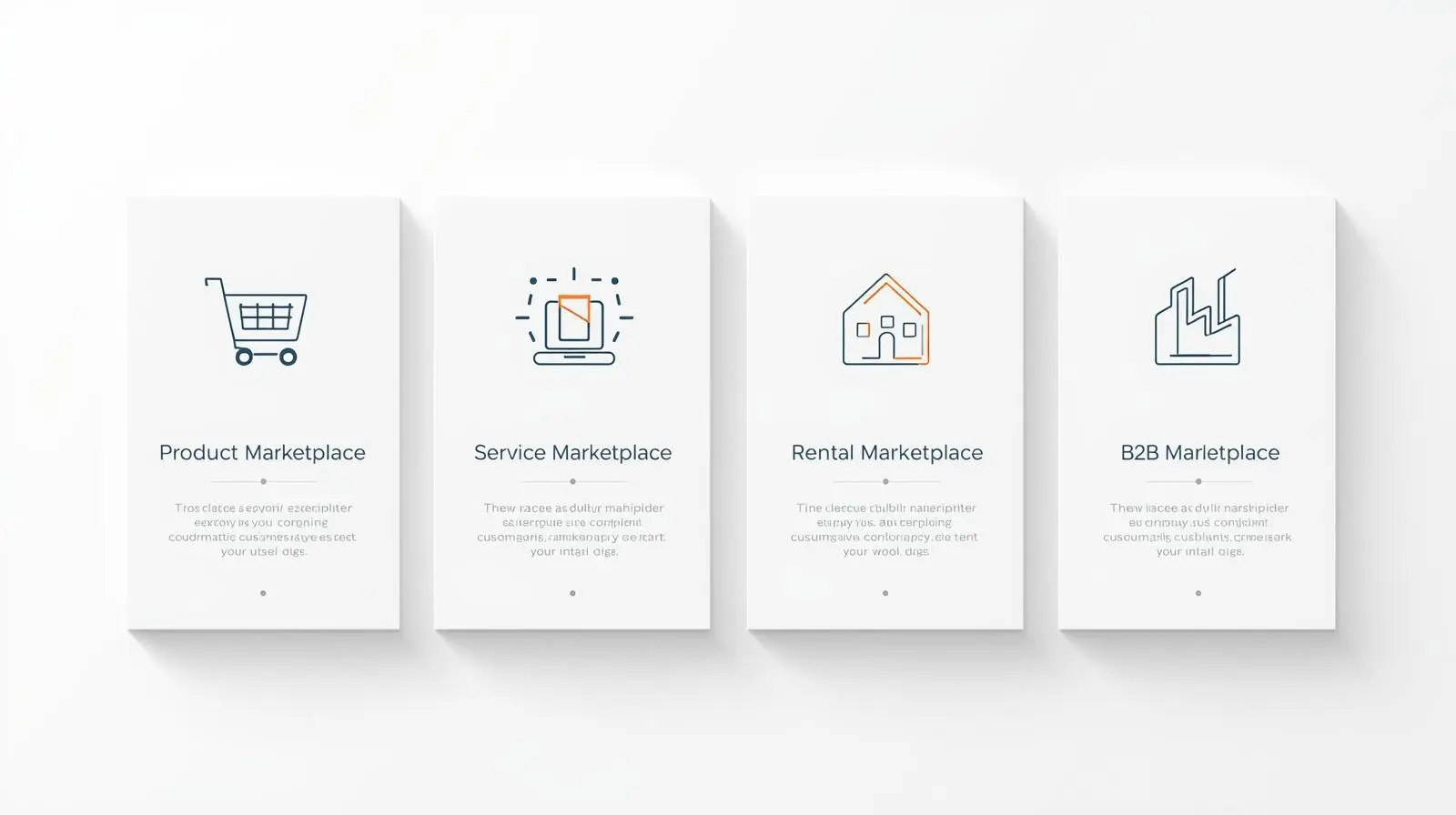
1. Product Marketplace Model
Product marketplaces host sellers who advertise physical items for sale.
For Example:
- Electronics
- Clothing
- Furniture
- Arts and Crafts
When buyers are looking for variety and price comparisons, product business marketplaces are the best option.
2. Service Marketplace Model
Service marketplaces connect service provider(s) to customer(s).
For Example:
- Freelancing
- Graphics
- Digital Marketing
- Home Services
- Consultation
Service business marketplaces are fast-growing because more and more people work from home.
3. Rental Marketplace Model
A rental marketplace gives people access to rental accommodations or devices.
Best to rent a:
- House, apartment, or other property.
- Vehicle [i.e., car, truck, etc.].
- Piece of equipment: tools, projectors, etc. from a construction company.
- This is an effective model within the sharing economy.
4. Business to Business (B2B) Marketplace Model
B2B is a type of marketplace that connects two businesses.
Best for:
- Bulk retailers
- Manufacturers
- Distributors
Most B2B transactions are large orders and result in greater profit margin per order.
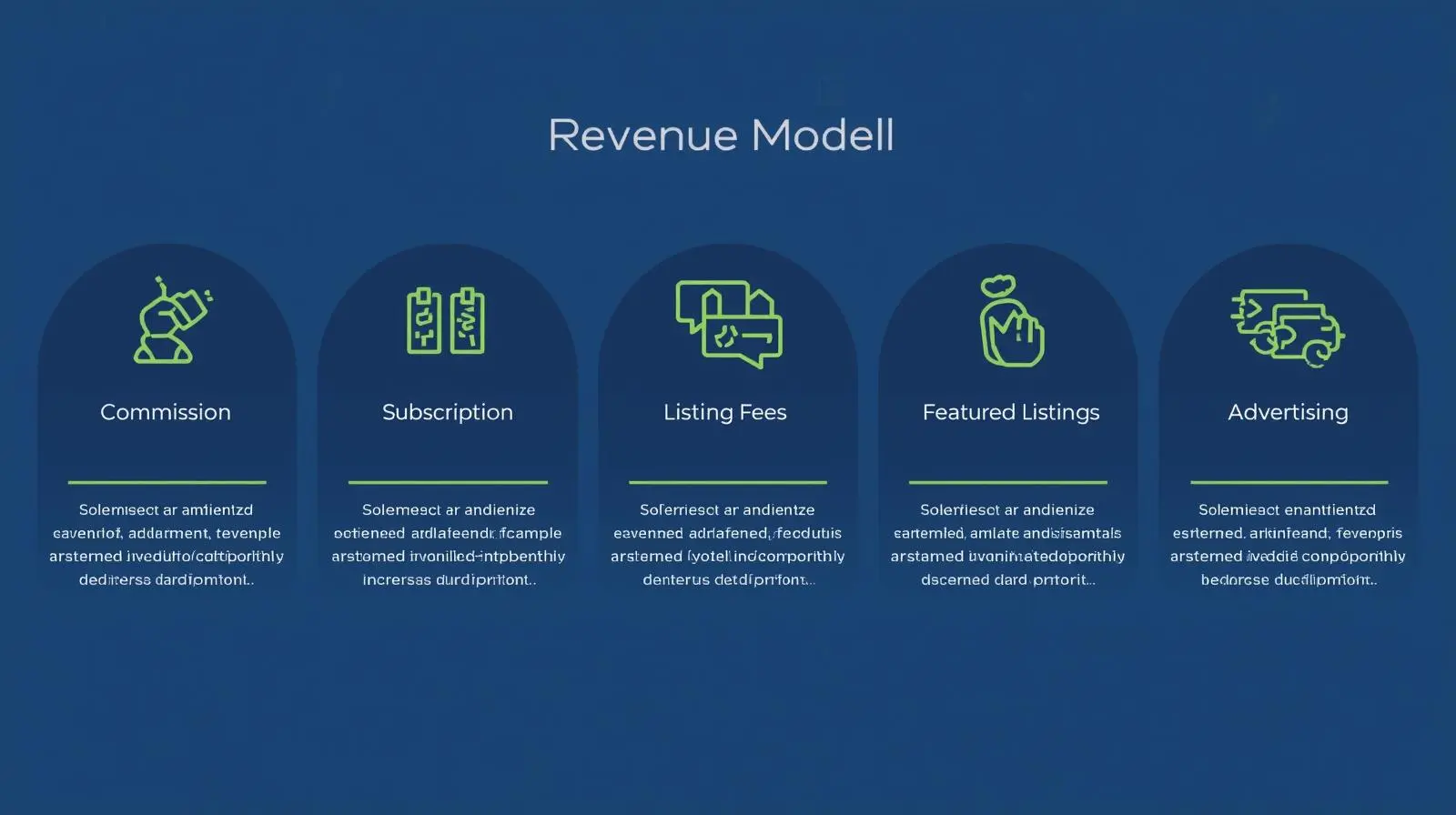
Revenue Models in Marketplace Business
Marketplace business models are varied.
Commission model
Taking a percentage of each transaction that takes place on the marketplace (usually between 5 – 20%)
Subscription model
Charging sellers a flat monthly/yearly fee to sell on the marketplace
Listing fees
Charging sellers to have their products listed on the marketplace
Featured listings
Charging sellers extra money to have their products featured at the top of the search results
Ad Revenue
Generating revenue from displaying paid advertising on the marketplace platform
Most successful marketplaces will have multiple revenue streams in order to be profitable.
Why Marketplace Business Model Will Be Profitable in 2026
The primary reasons for this include:
No inventory required
You don’t need to purchase or store inventory.
Easily scalable
More sellers will create more products and customers.
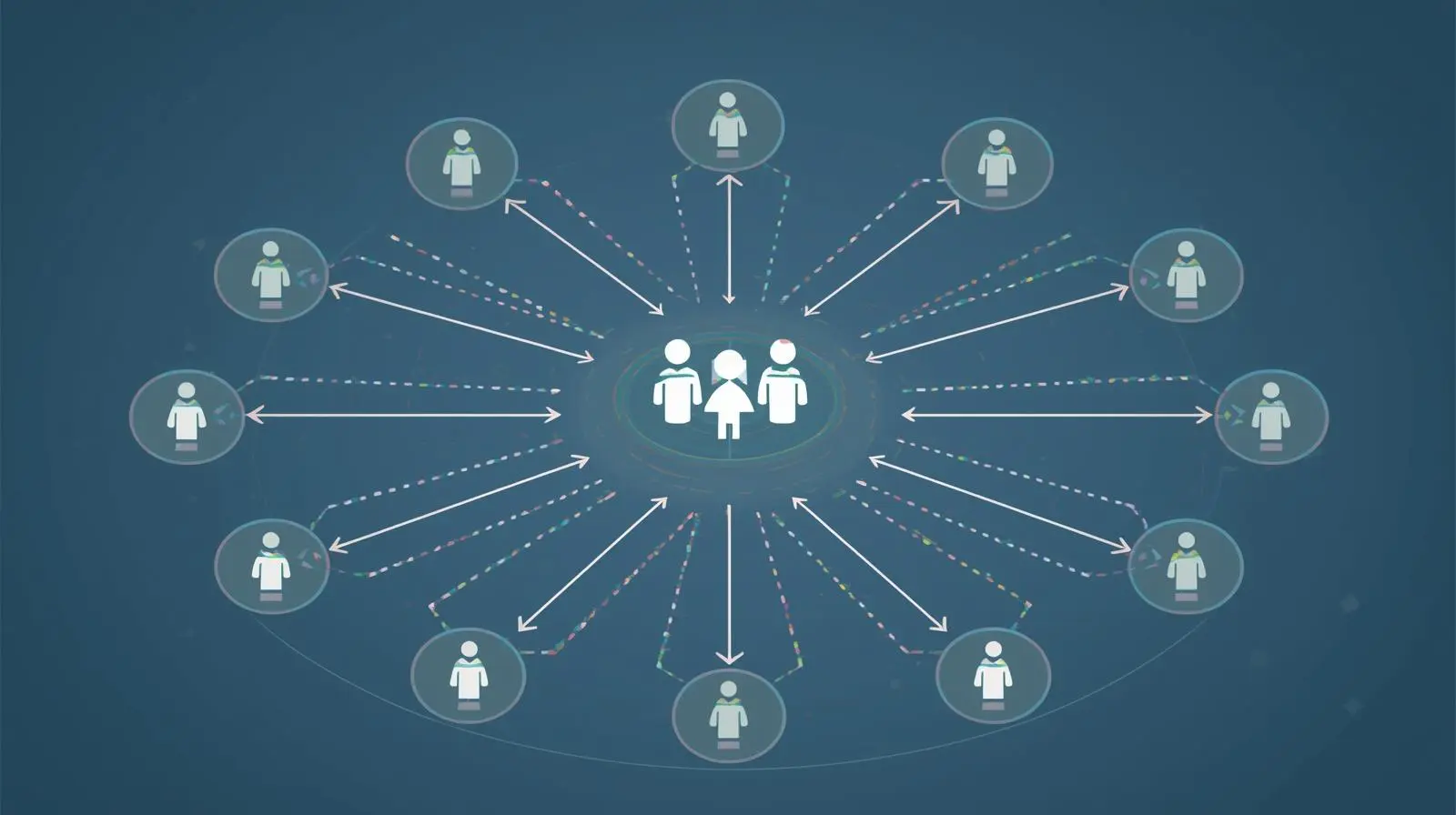
Network effect
With more users on the platform, it increases the overall value of the platform.
High-profit potential
Digital marketplaces have lower operational costs.
With digitally-based payment systems, ability to use AI tools, and worldwide internet availability, marketplace businesses have the potential to experience growth faster than traditional types of businesses.
Challenges of running a marketplace business
You must understand these challenges prior to starting a marketplace business.
- Finding sellers for your marketplace
- Attracting buyers to your marketplace
- Building trust with your buyers/sellers
- Resolving disputes between sellers/buyers
- Significant marketing competition
However, if you utilize the proper niche and develop the right strategy, you can overcome and manage your challenges.
Building a Marketplace Business in 2026
These straightforward steps will help you get started.
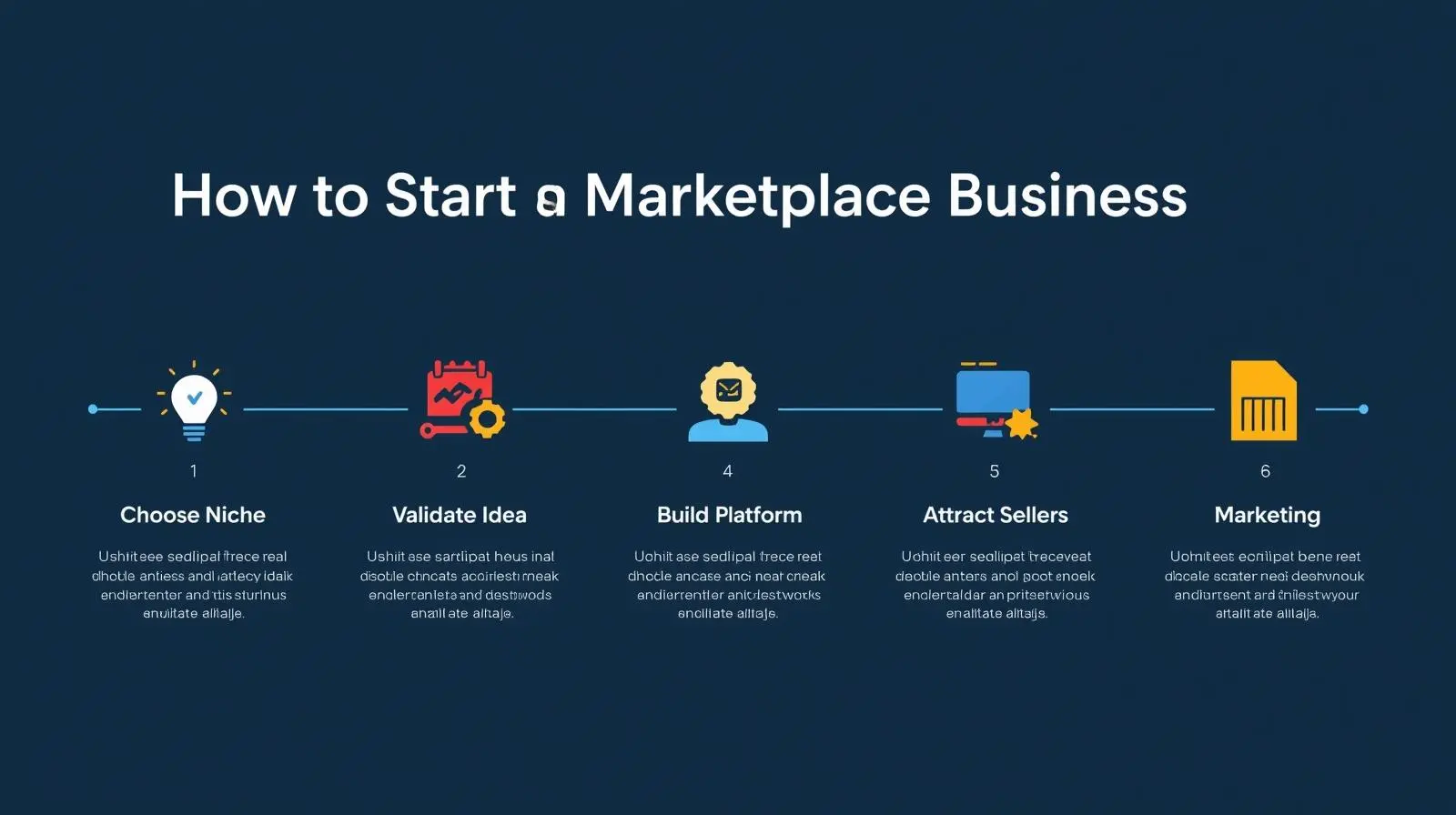
Select your niche
You don’t want to compete directly against the global giants, so select a specific niche that would include products, i.e. organic goods, services (i.e. house cleaning, graphic design, etc.), or digital templates (i.e. download and print).
Having a niche marketplace generally yields lower levels of competition with much greater potential for success.
Conduct Marketplace Validation
Determine whether your chosen niche has enough of a demand for you to start:
- Research demand
- Research competitors
Speak with potential users.
Building Your Platform
Ways you can develop your platform:
- Hire a developer
- Use marketplace software
- Work with No-code tools.
Attracting Sellers
To do this successfully, you will need to offer several benefits to sellers:
- Free listings
- Low commissions
Marketing support for their products.
Focus on Marketing and SEO
To drive sufficient traffic through your marketplace:
- Implement a content marketing strategy
- Engage in social media marketing
- Invest in paid advertising
- Utilize an influencer marketing strategy
By executing SEO effectively, you can generate organic traffic for your marketplace by taking a strategic approach to online marketing.
Marketplace Versus Other Business Models
In contrast to product-based businesses, service-based businesses, and SaaS startups, a marketplace model allows you to:
Create a way to connect buyers and sellers with one another.
Initiate growth through network effects.
Provide businesses with the ability to grow on a global scale.
To have success with a marketplace business model, you will need to exhibit patience and conduct planning in the long term.
Is the Marketplace Business Model Right for Me?
If all of the following apply to you, then a marketplace business may be the appropriate option for you:
- You have a good comprehension of a particular industry
- You have developed marketing skills
- You wish to be able to generate income on a scale basis
- You are capable of thinking in the long-term
If you seek to earn money quickly, you will not be well-suited for a marketplace business model.
Conclusion
The marketplace business model of 2026 represents one of the most scalable and profitable potential business models available via the internet.
If you choose the right niche, create a foundation of trust, and build a marketing strategy, you will be able to create a successful marketplace business.
For a full comparison with other profitable business models, visit Profitable Business Models 2026.