
Launching your own business can be very hard work; even without the extra stress of trying to be visible on the web as a result of your efforts. For new businesses that are working off smaller budgets, using search engine optimization (SEO) may prove to be the most affordable means of acquiring qualified customers and giving new companies an edge over larger, more established competitors.
In this guide, we’ll cover proven SEO strategies that can help you build your brand and grow your business. For a complete overview of marketing approaches, check out our Startup Marketing Strategies for 2026.
Why SEO Matters More for Startups Than Ever
When it comes to digital marketing, startup companies face unique hurdles. Most are focused on immediate results and do not have the funds necessary to pay for advertising. The good news is that search engine optimization (SEO) is a great long term growth strategy by providing compounding returns. Because of this, it is a great marketing approach for startups and provides many unique benefits over more traditional means of generating leads such as advertising.
By 2026, the startup world is going to be increasingly competitive with millions of new businesses starting each year. For those startups that begin building their online presence at an early stage, the future will be bright. Search engines will process more than 8.5 billion searches every day – a tremendous opportunity for those startups that actively pursue SEO.

Understanding SEO Fundamentals for New Businesses
Before jumping straight into tactics, you need to know how search engines evaluate websites. Google uses many factors (over 200) to determine rankings. For start-ups, if they concentrate on the factors that give them the most benefit, then this will give them the best ROI.
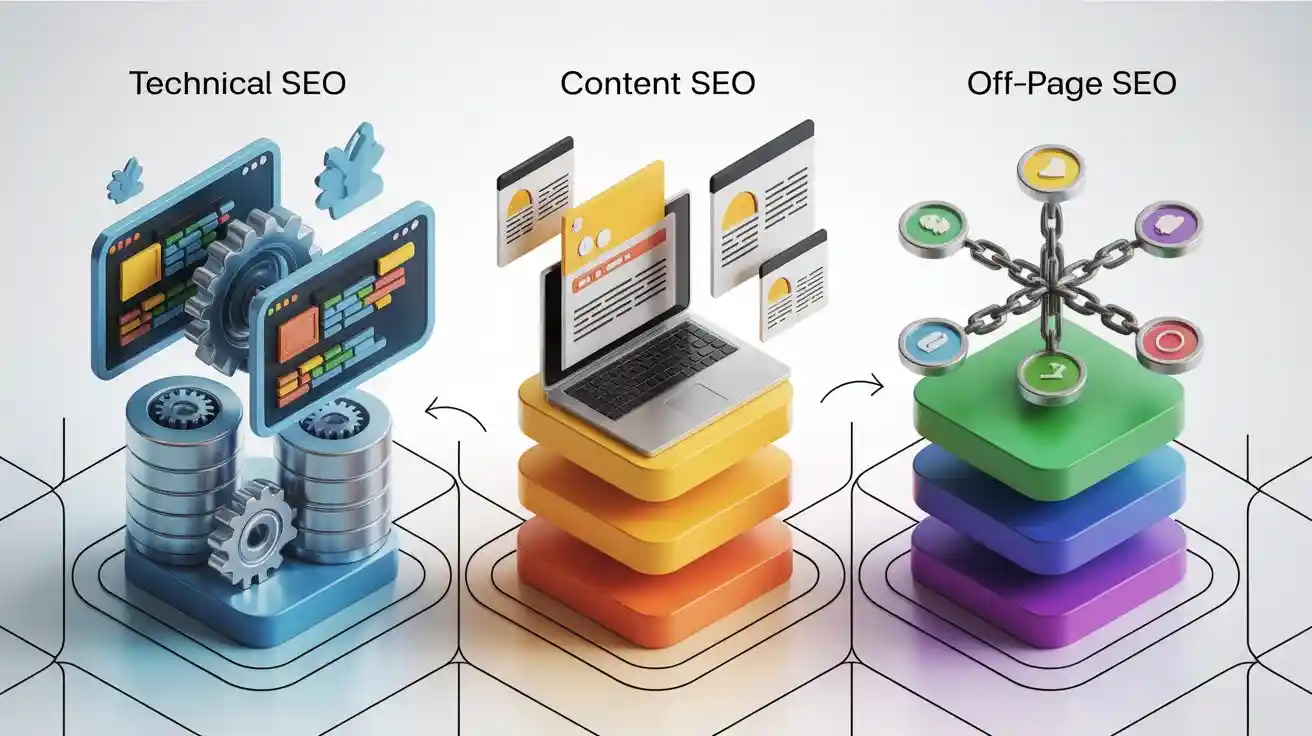
Search engines give priority to websites created for a good user experience and delivering high-quality, relevant content. Therefore, when developing your startup’s SEO strategy, it must be both technically correct and include a strong content creation plan, along with a robust link-building strategy.
The best way to establish a solid foundation for good startup SEO is to understand how your target audience behaves when using search engines. While larger, more established businesses typically have lots of data about their existing customers, startups must typically conduct research and use their competitors’ data/website to find keywords to rank for and to develop their content.
Keyword Research: Finding Your Startup’s Golden Opportunities
When you are trying to get your startup up and running, the best way to achieve success with SEO is through rigorous keyword research. Instead of going after the most highly competitive keywords (which are usually dominated by large companies), most smart startups will go after long-tail and niche keywords where they have the best chance of being successful.

Brainstorm keywords to attract your target audience and research possible keyword & search volume options using tools such as Google Keyword Planner, Ahrefs, SEMrush or others. You should be trying to find keywords that include a large number of people searching for them but have very little competition – these would provide you with the greatest chances to win quickly!
Another aspect to look at is what people are actually looking to do when they are searching with these keywords. Some may be searching to find information, some to make purchases, and some may be comparing products; all of these different types of customers will require different approaches in order to get traffic at every stage in their journey through the marketing funnel and thus match your content strategy accordingly.
If you have a service that only operates out of a specific geographical location(s), then there is a good chance that local SEO opportunities may exist for you to take full advantage of! People search with “near me” added on requests for products but they will generally have a much smaller amount of competition. By optimizing both your website & business listing(s), you should have the ability to drive a high-quality traffic source, while at the same time less competition than if you were located elsewhere.
On-Page SEO: Optimizing Every Element for Maximum Impact
The foundation of successful (SEO) optimization for new companies begins with on-site optimization. Each page of your website needs to be properly optimized in order to represent the value of that page to both users and search engines.
Title tag is your most significant on-page SEO factor. Write compelling title tags that contain your target keyword and encourage search engine users to click on them. Keep your title tags to 60 characters or less so they can be fully displayed in search results.
Meta descriptions do not affect rankings directly but greatly affect click-through rates. Write persuasive descriptions that accurately describe your content’s value and include naturally occurring and relevant keywords.
Header tags (H1, H2, H3) provide search engines with information on how your content is structured. Place your primary keyword in the H1 header tag, and use related keywords in the subheadings. This will make it easier for users to read your content and will also indicate to search engines the relevance of your content based on the other section headers.
Internal links connect your content to each other on your website as well as distribute authority across all of the pages of your website. Use descriptive anchor text that includes your target keyword when linking to relevant internal pages.

Content Strategy: Creating SEO-Friendly Content That Converts
Startup companies need to focus on Content Creation – This is the essence of effective SEO. Rather than developing generalised ‘Content’, develop topics that directly relate to the issues of your target audience, and use keywords where relevant, but in a natural manner.
Your niche is going to be covered by developing high-quality, all-inclusive, highly informative pieces of content about various topics related to your niche. Google ranks authority content higher in Search Engine Results Pages (SERPs) and expects to see expertise from a website as well as the whole user query in one piece of content.
To develop authoritative content that’s better than your competitors, consider the following:
- Create very long articles (longer than your competitors’).
- Create high-quality content (highly will get ranked very highly for keyword searches).
- Create an easy-to-read style of writing – avoid using jargon, slang, and other difficult-to-read/writing styles.
- Use test data, or case studies to develop credibility and support SEO efforts by increasing the volume of user-generated content, backlinks, and social shares.
- Keep content updated by creating a content inventory check every few months to see if there are any underachieving pages on your site and determine what data can be added to those pages to bring them back up-to-date.

Technical SEO: Building a Strong Foundation
Technical SEO helps search engines to crawl, index, and understand your website accurately. Startups should address technical issues from the start to avoid costly future problems.
Website speed affects how people use your website and also your rank in Search. To optimize for speed, you’ll want to do the following: 1) Optimize images 2) Enable compression 3) Use reliable hosting.
In 2026, mobile optimization will be mandatory. As more than 60% of searches are done on mobile, using responsive design and mobile-first indexing for your site is very important for SEO success.
To help search engines find and index your content effectively, create and submit XML sitemaps regularly monitor for crawl errors and fix broken links to keep your website in top shape.

Link Building Strategies for Resource-Strapped Startups
Creating quality backlinks continues to be one of the hardest things for new businesses looking to rank higher in Google search results through SEO. Luckily, innovative ways to create valuable links are possible and cost-effective as well!
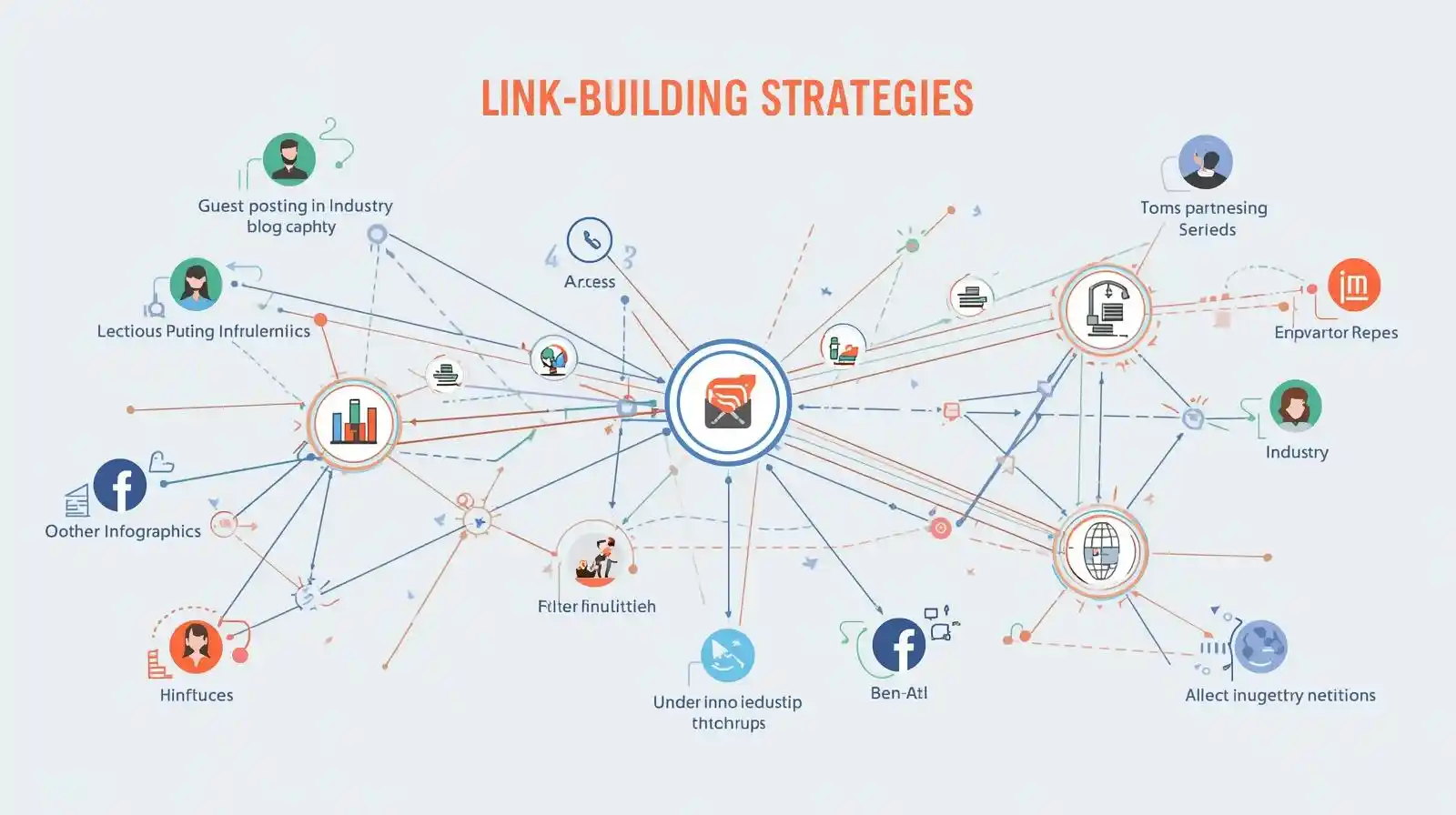
Creating quality backlinks through guest posts on appropriate industry blogs can help increase visibility and gain useful links. Instead, look for publications where people in your audience are reading from rather than those high authority sites. Building relationships with non-competing startup companies can also provide opportunities to create links between mutually beneficial projects. Working together on content projects and cross-promoting resources; you can expand your network through startup communities. By creating linkable assets (industry reports, infographics, free tools), you will be able to draw in … .backlinks because other sites that are looking for high-value content can link back to your site to share with their audience.
Local SEO: Dominating Your Geographic Market
Many new businesses catering to their community can take advantage of SEO for local businesses by utilizing local search engine optimization to find a competitive edge over larger businesses within their vicinity.
Put together an optimized Google My Business profile by providing accurate business information, uploading photos of good quality, updating content frequently on this site, asking happy customers for reviews, and responding in a professional manner to both positive and negative customer feedback.
It’s equally important to make sure that your business’s NAP (Name, Address & Phone number) information is consistent across all different online directories and citations; if the information is inconsistent in these places, it can confuse search engines and negatively impact your local search engine ranking.

Measuring SEO Success: Key Metrics for Startups
By tracking the right metrics, startups can evaluate their SEO performance and make informed adjustments to their strategies.
Grow your organic traffic, monitor keyword rankings, and measure your conversion rates, all of which will help you evaluate your overall performance in SEO. You may also take advantage of Google Analytics and Search Console to track your performance over time.
Track those metrics that are most appropriate to the overall success of your business rather than metrics that give you no benefit to the bottom line of your business. Review your organic search lead generation and determine the LTV of your SEO-acquired customers.

Conclusion: Your SEO Journey Starts Now
It takes time, repetition, and thoughtful planning to achieve effective search engine optimization (SEO) for startups. There are no immediate results when implementing SEO; however, the cumulative gains from effective SEO will lead to a long-term competitive edge through continued development.
Begin with in-depth keyword research, optimize available material, fix any technical issues, and incrementally build your brand’s credibility with ongoing high-quality content and continuous connection with others. Think about it this way: SEO is a marathon and not a sprint; however, for startup companies who choose to put in the effort, there will be great rewards in the future.
SEO is a long-term game, not a sprint. Focus on quality content, technical optimization, and consistent effort. Start implementing these strategies today to stay ahead in 2026. For more proven marketing tactics, read our Startup Marketing Strategies for 2026.
