
There are many ways to get started in the business world, and the most important thing to remember is that starting a business is like running a marathon, not a sprint. The fuel that keeps you moving along during your journey is your capital. Even with the greatest business idea, if you do not know how to raise money and more importantly, know how to manage your money, chances are, your business will not succeed.

1. The Lifeblood of Your Startup
There is an expression in the startup world that says, “Cash is King.” You may have a fantastic new product, a great team to help develop the product, and a web site with high conversion rates, but if your bank account is empty before you generate profits, your business will fail.
A common mistake many entrepreneurs make is thinking that securing funding for their new business is their ultimate goal. In fact, funding for a new business is merely a means to an end; the ultimate goal is to have a sustainable business. Startups fail not because of poor ideas, but because they run out of working capital.
At a Glance: Startup Finance Quick Summary
| Key Concept | What it Means | Why it Matters |
| Startup Funding | Raising capital from outside sources (VCs, Angels). | Helps you scale faster than your competitors. |
| Bootstrapping | Funding the business using personal savings/revenue. | You keep 100% ownership and full control. |
| Pitch Deck Template | A 10-12 slide presentation for investors. | It is your “sales pitch” to get investment. |
| Financial Projections | Estimating future revenue and expenses (3-5 years). | Shows investors the potential ROI of your business. |
| Break Even Analysis | The point where revenue covers all your costs. | Tells you when you will actually start making profit. |
| Small Business Accounting | Systematically tracking every dollar spent/earned. | Essential for taxes and being “investor ready.” |
| Burn Rate & Runway | How much you spend monthly vs. how long cash lasts. | Prevents your startup from suddenly running out of cash. |
2. Understanding the Startup Funding Stages
Not every business funding arrangement will be appropriate for every business; each one will require different types of financial capital based upon their respective life cycle stages. The following is an overview of the life cycle stages of a typical new venture:
- Pre-Seed = Idea Stage (prototype created)
- Seed Funding = Proof Stage (core team created)
- Series A = Optimization Stage (growth in marketing)
- Series B,C .. Etc. = Expansion Stage (become & maintain market leader)
- IPO (Initial Public Offering) = Public Stage (publicly traded on stock exchange).

3. Bootstrapping a Startup: Doing it Your Way
To bootstrap a new startup means that you don’t accept any outside financing but instead use your own money or profits from the company to fund it.
- Benefit: You own 100% of the business, therefore, an investor cannot tell you what to do.
- Disadvantage: Because of limited financial resources, you may experience slow growth compared to other methods of funding.
- Best suited for: Entrepreneurs seeking slow but consistent and sustainable growth without losing equity prematurely.
4. Different Ways to Fuel Your Startup (Types of Funding)
Where can we obtain funds? In addition to bootstrapping, these are additional sources of funding:
- Angel Investors: Known as Angel Investors, they are individuals who provide funding and mentoring for early-stage companies.
- Venture Capital (VC) Firms: These are professional companies that supply capital to companies for very rapid expansion with the goal of creating multi-million (or billion) dollar companies.
- Crowdfunding: Funding an early-stage company by raising small amounts of money from many individuals through the internet, using websites such as Kickstarter.
5. The Art of the Pitch: Your Pitch Deck Template
Getting a fund requires much more than a simple conversation; you should present your concept through a professional pitch deck template. This visual pitch is what you will use to demonstrate to potential investors why your business deserves their financial support.
Professional Pitch Deck Checklist
- Problem: What is the primary issue your company will be solving?
- Solution: How will your company’s product/service solve this better than other solutions available?
- Traction (Sales/Userbase): How many customers/use of your product/service has your company gained thus far?
- How much money do you require?

6. Financial Projections for Startups: Predicting Success
Your future is not the only thing prospective investors consider. When funding a startup, prospective investors will look to your financial projections as the best measure of how much revenue they expect to receive from your business in 3 to 5 years.
Every potential investor must see an evident path that has you successively–hopefully executing that plan–making a profit over time; each expense category (marketing, salaries, etc.) must be identified. Accurate financial forecasts reinforce existing investor confidence and support the creation of new investor relationships (Venture Capital, Angel).
7. Break Even Analysis: Knowing Your Safety Point
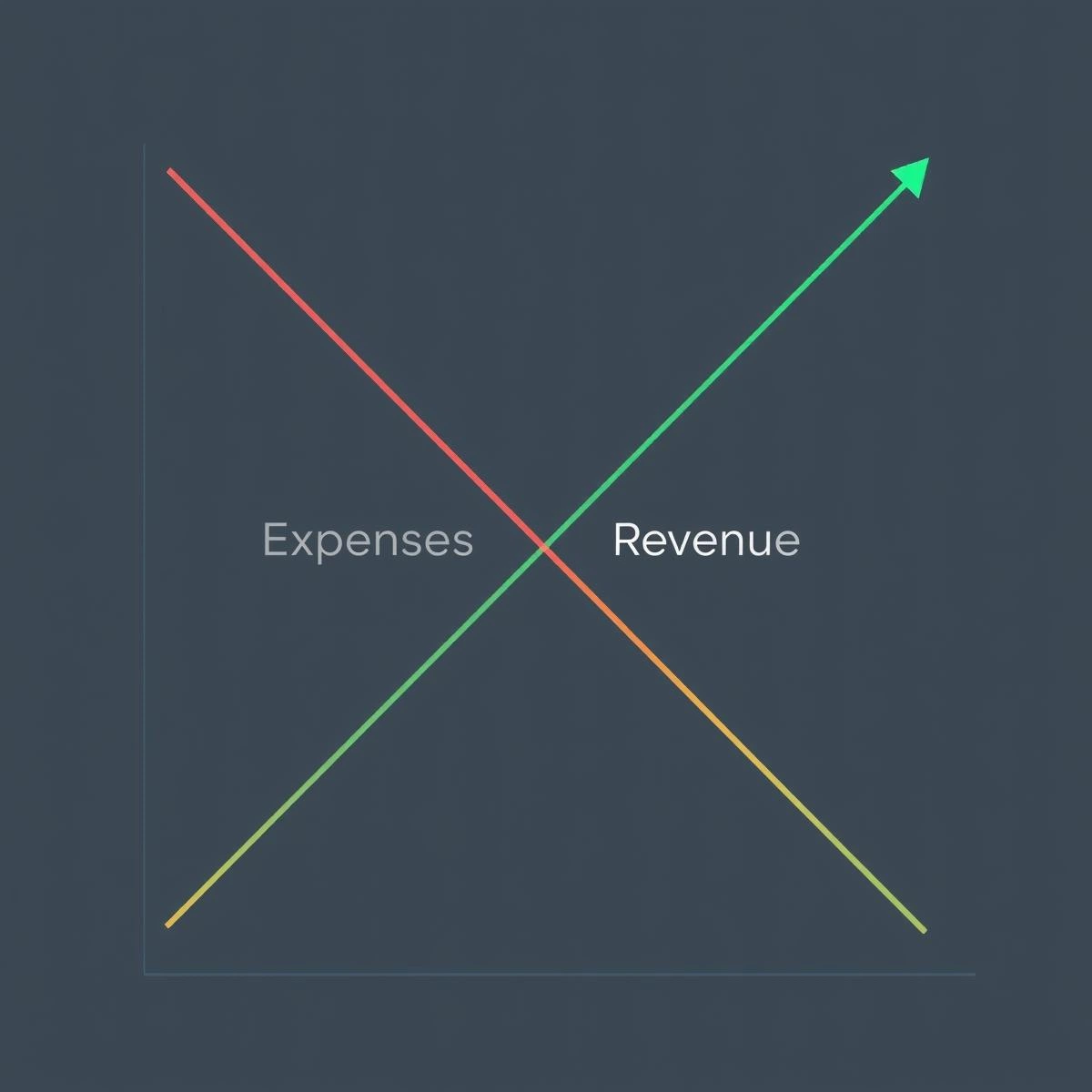
The next step in the journey is identifying where the ‘breaking even’ milestone for your startup lies (for the rest of this article we will refer to this as BT, Break Even or Break Even Milestone) and what implications will arise as you near this milestone.
Additionally, you will also learn about breaking even on variable costs and breaking even on fixed costs. Once you’ve reached breaking even on your total variable and total fixed costs, any revenue that you generate beyond that will simply be for pure profit, and the next major step would then be to reinvest this into your business and expand.
8. Small Business Accounting: Build a Solid Foundation
When starting a new business, many entrepreneurs do not pay attention to important details (boring). Tracking the money in and out of your small business is called small business accounting.
Having accurate accounts puts you in a position to attract investors. You will not receive funding from any VC if you have not set up your company books properly. Consider using a cloud-based solution for automating bookkeeping and ensuring that you are compliant with tax regulations from the beginning of building your business.

9. Financial Management: Burn Rate & Valuation
- Burn rate refers to the reduced amount of cash that you have to spend every month.
- Runway refers to how long you can keep your business operating without running out of cash in the bank.
- Valuation is the amount of cash that your company is worth at any given time; the difference between pre-investment (pre-money) valuation and post-investment (post-money) valuation is important.
Conclusion: Scaling Your Startup with Financial Discipline
Creating a successful startup requires more than just having a sudden revelation; it also requires the ability to fund your startup for the long-haul. The two elements that make up this foundation are the funding one needs to run a successful startup and the financial management of a successful startup.
Whether you choose to boot strap your startup to maintain total control or leverage your high converting pitch deck to raise money through outside investment, the success principles are aligned. The only way for someone to be able to provide realistic financial projections for their startup to gain the confidence of investors is through a solid grasp of numbers.
Understanding the facts will allow you to provide accurate projections for startup finance; learning about your break-even point will allow you to build a long term sustainable business because of your ability to manage the finances so that they will allow you to make money over time. Without a foundation of knowledge in small business accounting, you will not have any vision of your business, so you can’t be successful in the same way you would be looking at a map when you arrive at a location.
Your 3-Step Action Plan for Financial Success:
Audit your Cash Flow Position Today!
Calculate how your company is burning money by determining your current monthly cash burn, or “burn rate” and how many months of runway you have left, or “runway”. If you have less than six months of runway, it could be time to cut expenses and/or start the next round of fundraising.
Clean-up your Books!
If you are not using a professional accounting tool like QuickBooks or Xero, please set it up this week! One of the first things that a serious investor will want to see from you is clean and accurate bookkeeping records – so why not provide them now?
Update Your Pitch Deck!
Even if you are not currently raising capital, please keep your pitch deck current. Updating your pitch deck regularly will help you stay focused on both your value proposition and how well you are doing in your market.
Building a business is typically an up and down “bumpy ride”; however managing your finances correctly will help you convert that disorderly ride into a very smooth and efficient ride. Remember, sales create the customers, but it is smart financial management that allows you stay in business to continue to serve those customers! Keep your eye on the runway, manage your expenses and scale your business successfully!