
Creating a profitable business requires you to create a complete, robust Lean Canvas for Startups instead of a comprehensive 50-page business document. This quick and easy-to-read document gives you a quick view of your entire business model; it enables you to see the successes and failures that impact your business very quickly.
In the incredibly fast-paced world of 2026, the Lean Canvas is the best tool available to keep y ou focused and ensure you are solving real problems for your target market.

1. Why Use a Lean Canvas?
The Lean Canvas gives you an overview of your business model without having to write a full business plan. It gives you the opportunity to ‘see the whole picture’ before you dig down into your business model.
- Fast – You can map out your entire business model in around 20 minutes.
- Concise – You’re able to get to the ‘meat’ of your business without any fluff.
- Portable – Easy to share with potential partners or investors to receive feedback.
2. The 9 Blocks of a Lean Canvas for Startups
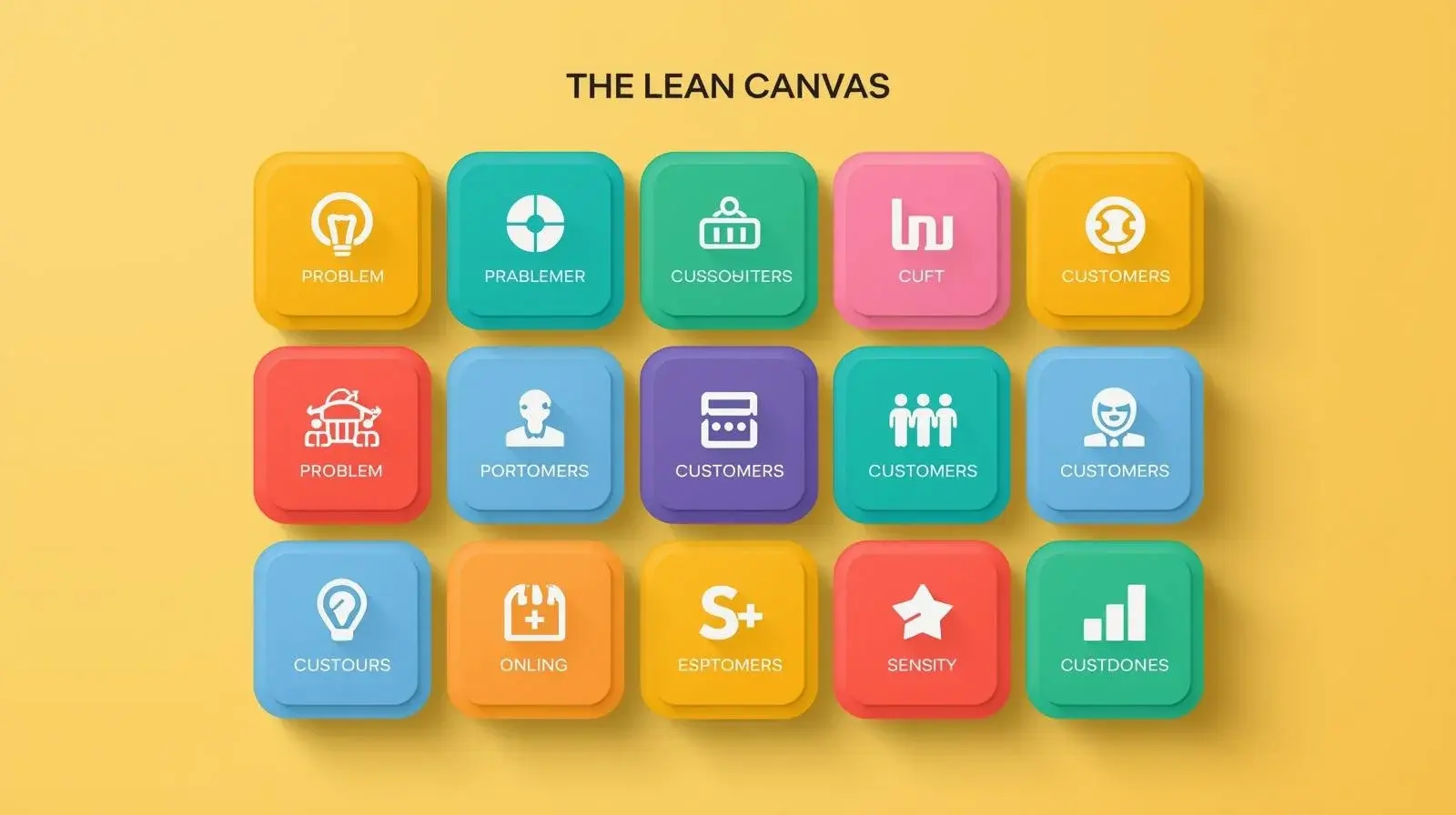
There are a total of 9 sections on a Lean Canvas and this step-by-step guide has been put together for you to use during the development process.
- What are the top 3 problems that your customers have?
- When considering your target market, who are your customer segments? (Relate this back to your Market Research)
- What are some of the unique reasons why customers should buy your product over the competition
- List the top 3 product features that will help solve this problem.
- How will your customers find you? (Marketing Channels), such as Ads, SEO, Social Media, & so forth.
- How will income be generated? (e.g. Advertising, Subscriptions, etc.)
- What are your primary expenses in relation to these costs?
- Key Metrics: How will you measure success? (Daily users, sales, etc.).
- Unfair Advantage: Something that cannot be easily copied or bought by your Competitors.
3. Connecting Lean Canvas to Your Startup Journey
Completing a Lean Canvas is more than just “box-ticking.” It’s the starting point for all the things we discuss in Business Startup Basics.
If you can’t complete the “Problem” box, you may have to go back to Idea Validation. If you can’t locate your “Unfair Advantage,” you have to look harder at your Competitor Analysis.
4. Common Mistakes to Avoid
- Too Vague: Don’t just say “Everyone” is your customer. Be specific!
- Falling in Love with the Solution: Spend more time talking about the Problem you are solving than the cool features you’ve built.
- Leaving it Static: Your Lean Canvas should evolve as you learn more from your customers.
Conclusion: One Page to Rule Them All
The Lean Canvas is your roadmap. It will remind you of what’s important and prevent you from creating something that nobody wants. Download a template today and see if you can fill it out for your startup idea!
Want to see how this fits into the bigger picture? Check out the full guide here:Business Startup Basics: The Roadmap to Success.
