

Hi there, rock star of the future startup! To establish your niche, you must learn how to conduct competitor analysis for startups. Understanding the landscape is essential for success, as we discussed in our guide to the Business Startup Basics pillar.
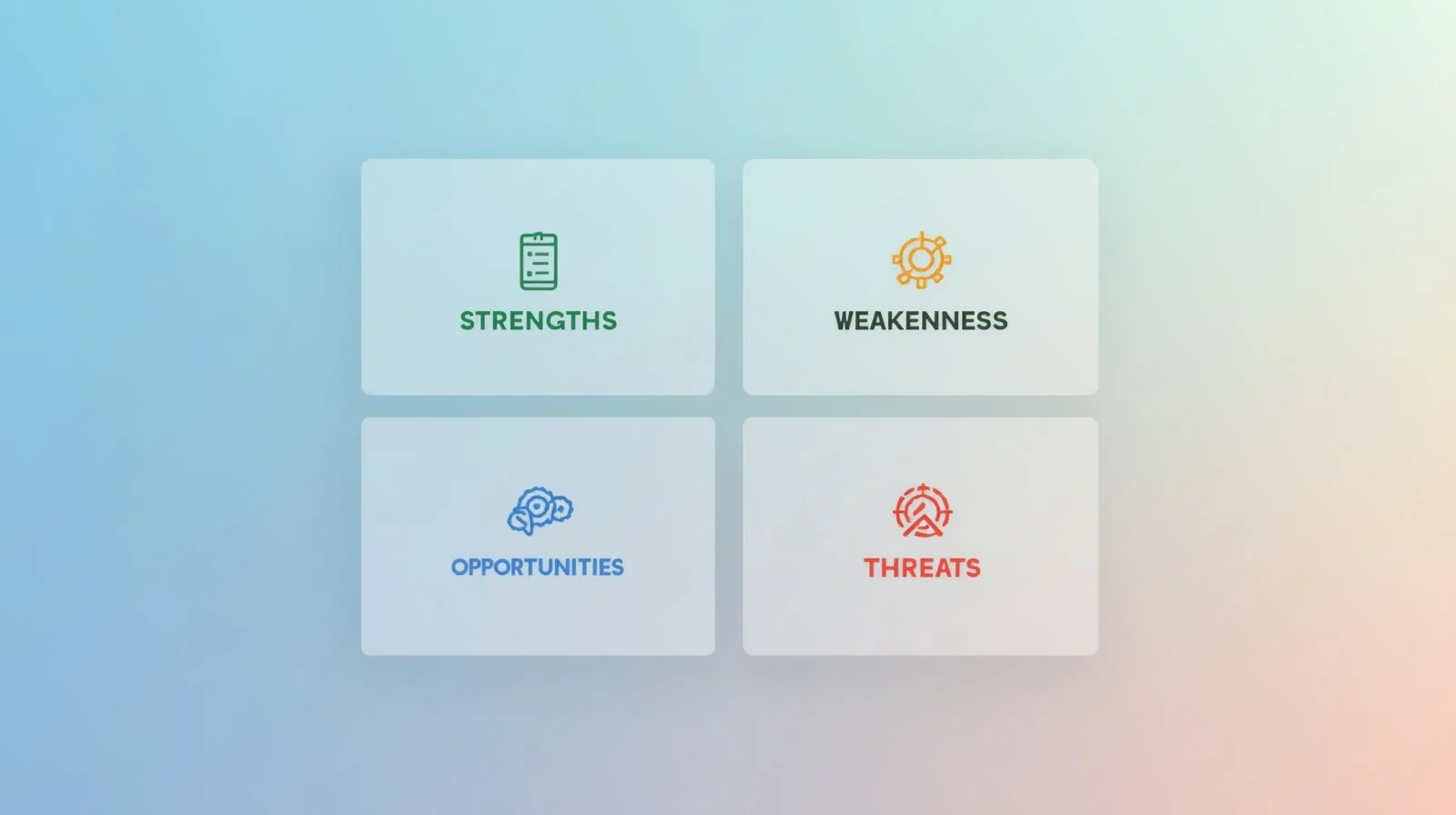
Competitor Analysis is the procedure of finding, assessing, and analysing your competitors’ strengths and weaknesses. Startups must do Competitor Analysis; it’s an important part of strategy development.
Talking about your rivals is about being informed, not about being scared! It’s similar to having a secret playbook when you learn from your rivals. It will enable you to pinpoint your own specialty, gain insight from the errors of your rivals, and ultimately gain more followers.

Why Competitor Analysis for Startups is a Game-Changer
Before you start a detailed competitor analysis you should have clear categories of competitors.
Why bother with other people when I could be developing my own product?” may be on your mind. That’s a valid question, but here’s why it’s revolutionary:
- Discover Your “Secret Sauce”: By observing what others are doing, you can determine what sets you apart.
- Take Note of Their Errors: Perhaps someone introduced a brand-new service that was criticized by all in the reviews. You can learn from their error.
- Identify “Market Gaps”: You may notice a market of individuals that no one else is interested in. That is your treasure!
Who Are Your Competitors, Really?
But don’t just look for businesses that are just like yours. Think bigger:
Direct Competitors
These companies are vying for the same customers’ business by offering the same goods or services. Your direct rival if you open a burger stand is the one in the next block.
Indirect Competitors
These guys are using a different approach to solve the same problem. Using the burger example as an example, a salad bar or pizza place is an indirect competitor since they are also fighting for your customers’ “lunch money.”
Replacement Competitors
These are the most challenging. They offer a completely different way to spend the same amount of time or money. The customer might choose to buy groceries and prepare meals at home instead of eating out at your burger joint.
How Competitor Insights Fuel Your Market Research
Prior to delving into Market Research for Startups, you must ascertain your competitors. While market research will give you an idea of what the customers in that market want, competitor analysis will give you an idea of who is in the market. Your startup idea will become invincible as a result.
When you combine your market research with a solid competitor analysis it will give you a more focused and stronger startup strategy.
Checklist for Your Competitor Analysis Strategy
Using this checklist will help to create a structured and actionable process for competitor analysis.
A telescope is not required – only a laptop! Here is the list of items you will want to look at in order to track:
Your Competitors Offering(s): What do they primarily advertise as their key features? Where is their deficiency in offerings?
- Pricing Position: Are they the “cheap” provider or the “luxury” vendor? Do they sell a subscription based service or are they strictly a one-time payment vendor?
- Search Engine Ranking/Marketing Strategy: What specific words/phrases do they rank highly on Google? (Use free resources like Google Search Console)
- Social Media Presence: Are they on LinkedIn or Instagram? How do they communicate with their audience?
- Customer Reviews: This data is very useful. If you look at their 1-star and 3-star reviews (on Google, Trustpilot), you will have access to the areas where they do not meet their customers’ expectations.
When you look at Competitor Insights as a function of “What is currently working” and Market Research as “What is absent from the market” you are able to build something unique.
Creating a Strategy from Your Competitor Analysis
The data from your competitor analysis should always result in a strategic action.
The collection of data without a plan to act on it is pointless. Here are some tips for transforming spying into strategy:
- Differentiate Yourself, Not Just Improve: If all competitors will be focusing on Low Price as one of the ways to attract more customers, you should focus on “Premium Quality” as the way to differentiate yourself.
- Repair the Broken Items: If customers say the competitor app is “too slow,” you better have a really fast app.
Focus on the Competitors’ Unhappy Customers: Utilize methods of SEO and paid advertising to let these customers know that you have the “fix” for the “pain” they are experiencing.

Connecting the Dots
Analyzing competitors provides a strong base for your business. Gathering information here will help inform your Business Plan. If you haven’t done so already, we encourage you to view other startup modules such as Idea Validation and Sales/Operations to understand how competitors affect all aspects of your startup.
Competitor Analysis for Startups: Common Tools to Use
Competitive Matrix
The Competitive Matrix is an easy way to graphically compare a startup with its competitors. A table will contain the startup’s competitors on one side and the startup’s features on the other. Think about the following categories:
- Pricing – high or low?
- Target Market – who is the target consumer for each competitor?
- Key feature – what is the key function of each competitor?
How to Use Social Media for Rival Research
You should examine your competitors’ social media presence on LinkedIn and Instagram to determine which content resonates most with their followers.
The comments on their posts direct you to customer pain points which your startup needs to solve.
Ethical Spying: The Do’s and Don’ts
The term “spy” requires you to maintain your ethical standards according to our agreement. You will never attempt to access unauthorized systems or take confidential details from others. Your research will focus solely on information which exists in public sources including blogs and social media and customer reviews. Your academic goal requires you to investigate the market instead of using existing material from others.
After you learn essential startup building skills, which basic skills do you need to proceed with your next startup business development phase? The complete Business Startup Basics: The Ultimate Pillar Guide provides you with additional information about our program.
Competitor analysis isn’t just a one-time thing; it needs to be an ongoing process to keep your startup competitive in this constantly changing market .
Conclusion
Competitor analysis is an ongoing process. The marketplace exists as a river that undergoes continuous transformations. The market will experience both new competitor arrivals and changes in existing competitor strategies. You should maintain vigilance while searching for opportunities to deliver greater value than your competitors.
The path to success becomes easier for you when you understand your competitors because you will discover their most straightforward methods to achieve their goals.
