
In the current market, there are so many companies with products and services on offer that consumers can compare the most suitable one before they make a decision.
This is the stage where a Unique Value Proposition becomes crucial.
A Unique Value Proposition explains what makes a customer choose your company over your competitors, providing information about how you are different from others, what solution you provide to customers, and what benefits they receive from your product/service.
Without a clear Value Proposition, even a good product may not successfully acquire customers.
In this article, we will discuss what a Unique Value Proposition is and why it is important to start-ups, as well as how to develop one that will instantly engage potential customers.
What is a Unique Value Proposition?
A Unique Value Proposition is a short, straightforward statement that tells potential customers:
- What your business offers
- Who your business provides a product or service to
- How your product/service is different or better than others
The Unique Value Proposition answers the most important question a potential customer has:
“Why would I want to do business here?”
Your Unique Value Proposition (UVP) must be clear and instantly apparent on your website.
An example is:
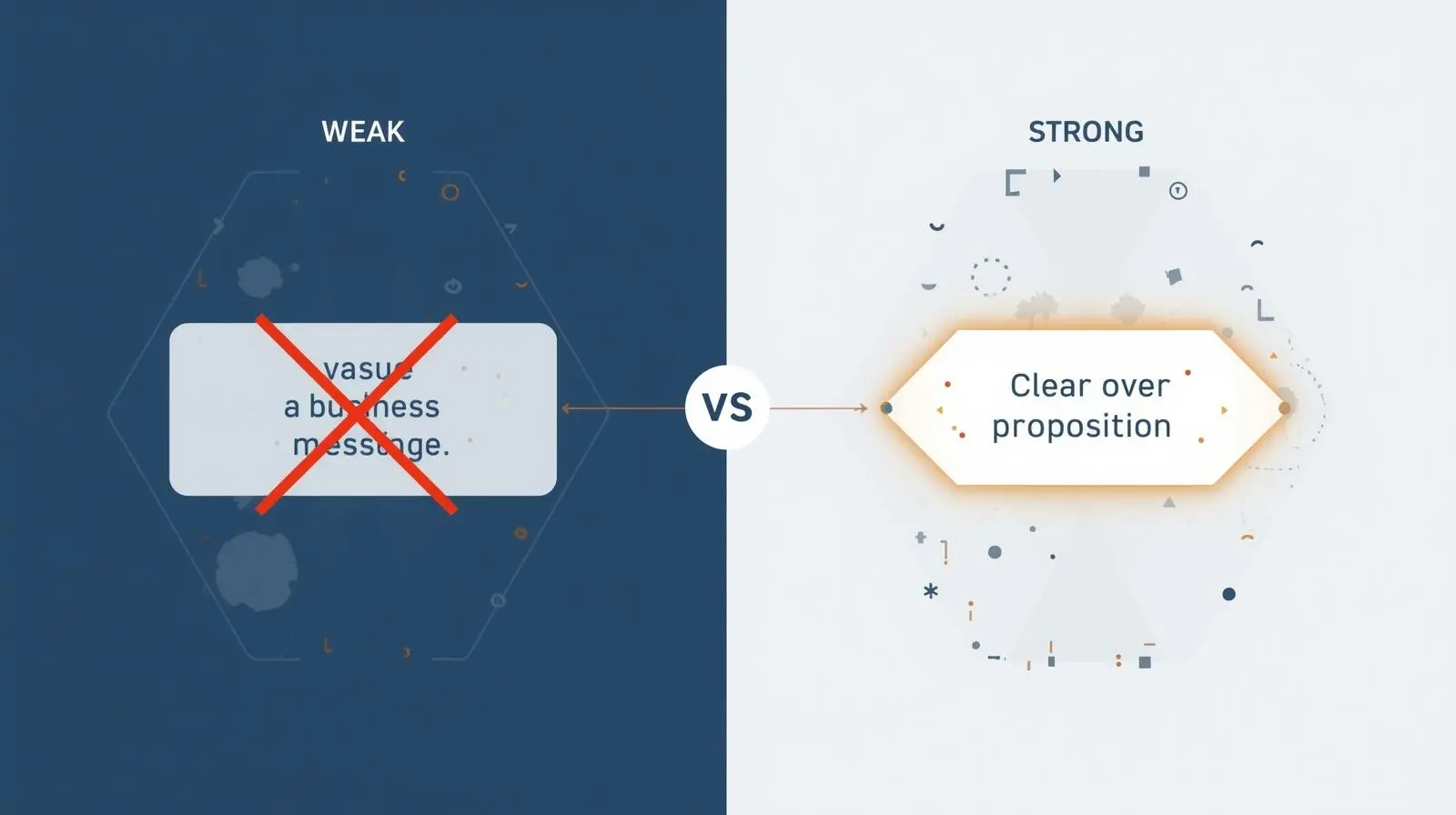
- Weak UVP
- High-quality business services
- Strong UVP
Fast, affordable website design services for new startup companies growing quickly.
In this case, the second UVP has more clarity that shows:
- The type of service that is provided
- The audience it is intended for
- The benefits of the service
If you want to learn how to write a powerful value proposition step-by-step, read our detailed guide on Unique Value Proposition for Startups.
Why a Unique Value Proposition is Important
Many startups fail to get customers, not because of an inferior product, but due to lack of clarity in their message.
An effective value proposition will help your company:
1 Make an impression quickly
Most of the time people visiting your website decide within seconds if they will stay and look around or leave.
If they can find the answer to the following questions on your homepage quickly, it will encourage them to continue to investigate your site:
- What does your business do?
- Who do you help? (your potential customers)
- How does what you do matter?
2. Differentiate Your Business
There are many types of businesses, and there is often a lot of overlap in the services they provide.
A Unique Value Proposition (or UVP) explains why your business is unique compared to other businesses providing similar services.
As an example, imagine that there are two marketing firms offering social media as a service; however, their UVPs differ:
Agency A:
Providing affordable marketing services to small businesses.
Agency B:
Using data to create social media strategies that generate online sales.
The second example is stronger than the first because the second example provides a specific result from the agency’s efforts.
3. Increase Conversion Rate
If your audience understands your value proposition from the outset, they will be more likely to.
- Sign up
- Request a quote
- Purchase a product
- Contact your team
A strong UVP will drastically improve your conversion rate.
4. Strengthen Your Brand Image
The value proposition is a key defining factor of how the brand positions itself in the market and represents how the business desires to be viewed.
For example, a business may wish to represent itself as:
- Affordable and practical
- Premium and high quality
- Fast and efficient
- User-friendly
A clear UVP will keep your messaging consistent throughout all channels of communication.
If you want to build a strong brand from the start, including choosing the right name, check out our guide on how to choose a business name for your startup.
Elements of a Strong Unique Value Proposition
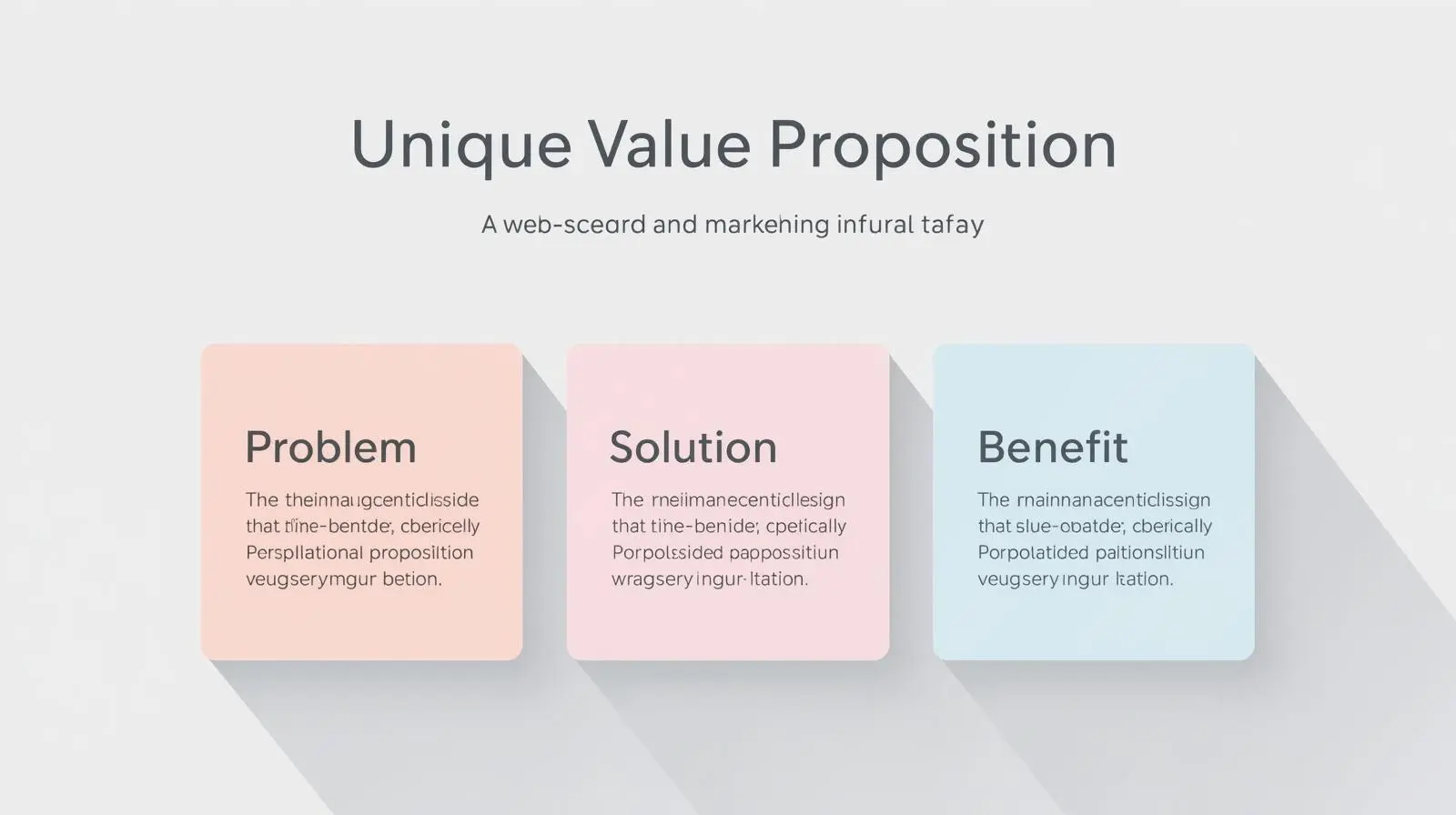
Usually an effective value proposition contains three body elements:
1. The Problem
You must be able to describe your customer’s problem. Examples of potential problems experienced by customers:
- Businesses with lead generation issues
- Startups looking for a cost-effective way to brand themselves
- Entrepreneurs who lack the technical ability to grow their business.
By recognizing the customer’s problem we can show the customer we can help them.
2. The Solution
You must also explain to the customer how your product/solution solves their problem. Examples:
- Website design
- Marketing strategy consulting
- Productivity software
Be very clear and simple.
3. The Benefit
Finally, you should summarize the overall benefit the customer receives. Examples:
- Time savings
- Increase in revenue
- Reduced complexity
- Improved efficiency
The benefit is the primary reason customers take action.
Simple Formula for Writing a UVP
To create an effective value proposition, try to follow this simple method:
We help [the specific group] to accomplish [the goal we can assist them reach], by providing [a particular service/product].
Example:
We assist start-up companies in the speedy launch of a quality, professional web site through affordable design.
Another example pertains to our example of a value proposition:
[Your specific service or product] allows our targeted user (the audience) to resolve [the problem the user has] and collect [the benefit from the customer’s actions].
Example:
Marketing automation programs that are designed for small businesses provide a way for the company to regain time due to the greater level of engagement created with customers.
Weak vs Strong Unique Value Propositions
Unique Value Proposition Example:
Weak Example:
Providing reliable, high-quality business solutions.
Providing trustworthy, professional services.
These two examples of “weak” unique value propositions can apply to nearly any business.
Strong Examples:
Low-cost branding & logo products for early-stage companies.
AI-Based marketing analytics that enable e-commerce websites to grow their sales volume.
Simple to use accounting software specifically for freelancers.
These examples clearly identify:
- Who’s going to benefit from using your service/product
- What the service/product does
- Why the customer should use the service/product
Where Your Unique Value Proposition Should Appear
Your value proposition needs to be present in several different locations.
1. Website home page
Specifically your headline is where your UVP is going to be most beneficial to your business because it’s the first thing someone sees when they visit your website; they will be able to clearly identify your business in the first 5 seconds.
Homepage Example Structure
- Headline = Clear value proposition
- Subheadline = Additional explanation/examples of clarity of definition
- Call to Action = Encourage the user to take some kind of action (e.g. a button that says “Start Here American Academy
2. Landing Pages
All landing pages related to any marketing campaign need to have UVP value prop associated with that specific campaign launch.
3. Marketing Materials
Will also include UVP such as:
- Email campaigns
- Social media bio
- Sales/marketing presentation
- Any advertising campaign (including print, TV, internet, etc)
Being consistent with how you display your UVP throughout your business helps to reiterate your brand message.
How to Discover Your Unique Value
A lot of entrepreneurs and business owners have trouble defining what makes their company unique. Here are a few questions you could ask yourself.
What problem do you solve best?
Define the central issue your enterprise tries to address.
Examples:
Supporting starting companies with cost-effective branding packages.
Who benefits most from your product?
Clearly define your target audience.
Examples:
- Independent workers
- Business owners
- SaaS creators
- eCommerce retailers
What benefit do you provide?
Examples:
- Less expensive
- Delivered more quickly
- Greater service
- Specialized skills
What is the benefit that is most important to your customers?
Poorly constructed unique value propositions are often caused by mistakes made by startups.
Too Broad
“Best Services for Your Business” provides no useful insight or information.
Do not use vague terms.
Targeting Everybody
When you try to reach everyone, your delivery weapon weakens.
Instead, focus on a distinct target audience.
Example:
Web Design for Technological Startups.
Using Complex Language
Your unique value proposition (UVP) must be instantly recognizable.
Avoid;
- Technical terminology
- Lengthy, convoluted phrases
- Trendy phrases
Understanding is always the key to each other.
Hiding Your Unique Value Proposition
Other websites have hidden their UVPs far down in the page to make it difficult to find.
Your UVP needs to be above the page’s fold so visitors can find it right away.
Testing and Improving Your Unique Value Proposition
Your first version of your UVP likely will not be perfect.
As businesses succeed, they will continue to test new ideas and refine them.
There are metrics by which to evaluate performance, for example:
- The website’s bounce rate
- The conversion rate
- The customer feedback
- The click through rate
If your website visitors are leaving your website very quickly. Your UVP probably needs refinement.

How Your Unique Value Proposition is Related to Your Brand
Your Unique Value Proposition creates the way customers will recognize your company and support the way people will position your Brand.
Your UVP should be consistent with:
- Your Brand personality
- Your Visual Identity
- Your Marketing Message
These three pieces create a cohesive and consistent Brand experience.
If you would like to know more about how Your Unique Value Proposition fits into the big picture of developing a Brand, please see our guide on: Branding & Positioning for New Businesses.
Final Thoughts
The Value Proposition is a powerful marketing tool that defines what your product/service provides to customers and what differentiates it from others in the market. A strong value proposition has four key constituents:
- Clarity
- Specificity
- Benefit orientation
- Simplicity
A well-defined value proposition can often mean the difference between a visitor to your webpage leaving immediately or becoming a very loyal customer.
Quick Value Proposition Checklist
>Before you finalize a value proposition, ask yourself:
- Does this communicate clearly what our company offers?
- Is our target audience clearly defined?
- What is an actual benefit our company will deliver?
- Can our proposition be communicated in five seconds or less?
