
A SaaS Startup is one of the most scalable and profitable online business models today. A SaaS Startup delivers software
A subscription model allows you to sell an ongoing service via the internet instead of just selling a product once. Customers can pay their subscription dues every month, every year, etc., and have access to your software for as long as they continue their subscriptions.
The recurring revenue aspect is what makes a SaaS business so attractive to entrepreneurs – once you’ve built your system, you can allow your customers to continuously subscribe to it without having to incur any further costs in producing it. As a result, many entrepreneurs choose a SaaS model.
If you’re interested in looking at all types of businesses prior to starting one, read through our Mini Business Models pillar guide to identify the best opportunity for your situation. Additionally, look through our Online Business Ideas, Service Businesses, and Product Businesses sectors for comparative analysis.
What Is a SaaS Startup?
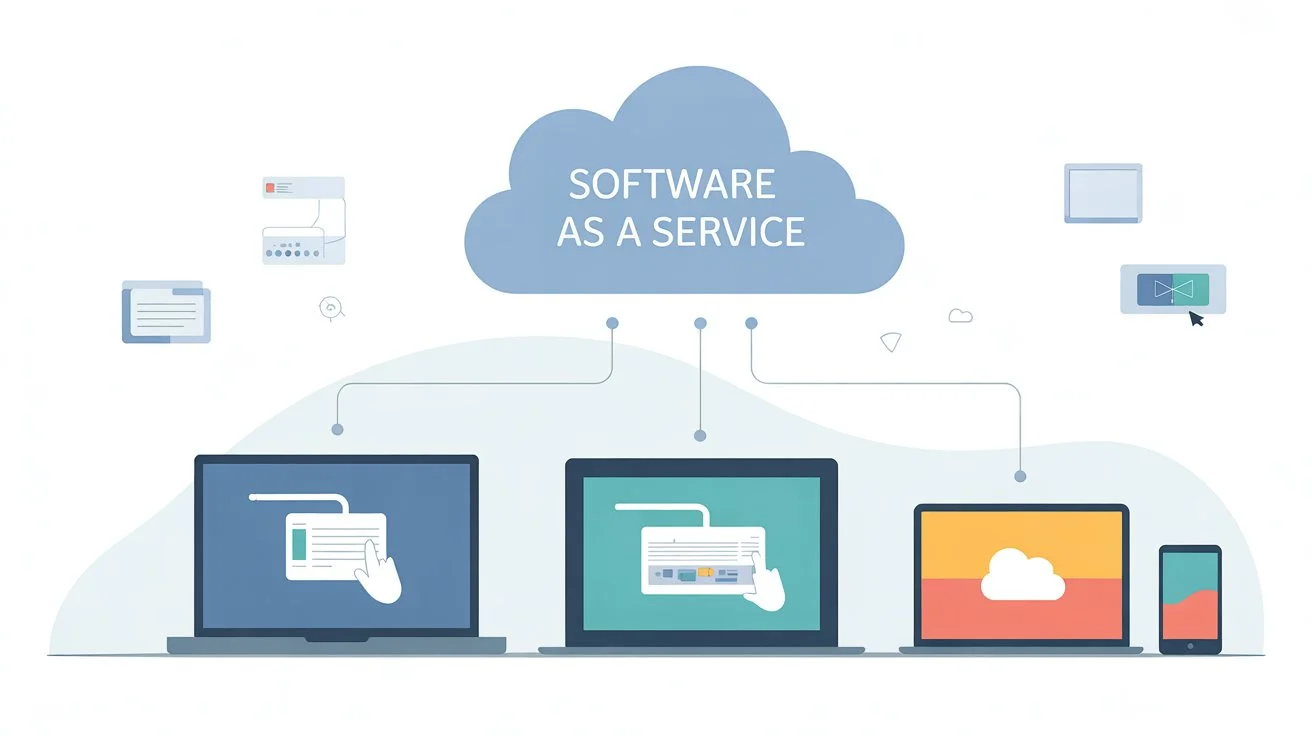
A SaaS Startup offers customers cloud-based software through subscriptions. The software is hosted online and can be accessed through a web browser or mobile application.
Instead of having to install software on their computer, customers simply log into the application and start using it immediately.
Examples of these types of applications include:
- Project Management Applications
- Email Marketing Applications
- Artificial Intelligence Writing Applications
- Accounting Software
- Customer Relationship Management Systems
Customers pay monthly or annually, which provides the company with a predictable and stable revenue stream.
Why a SaaS Startup Is Growing Rapidly
Starting a SaaS Startup is appealing for many good reasons!
Recurring Revenue
Subscription-based services produce stable monthly income, making it easy to predict cash flow.
High Profit Margins
Operating costs are relatively low once the initial investment has been made. There is no need to carry inventory.
Global Market Access
You can sell your software all over the world without geographical limitations.
Automation Opportunities
Sales funnels, onboarding customers, and providing support can all be automated.
Due to these factors, SaaS businesses tend to grow much faster than traditional businesses.
Types of SaaS Startup Business Models
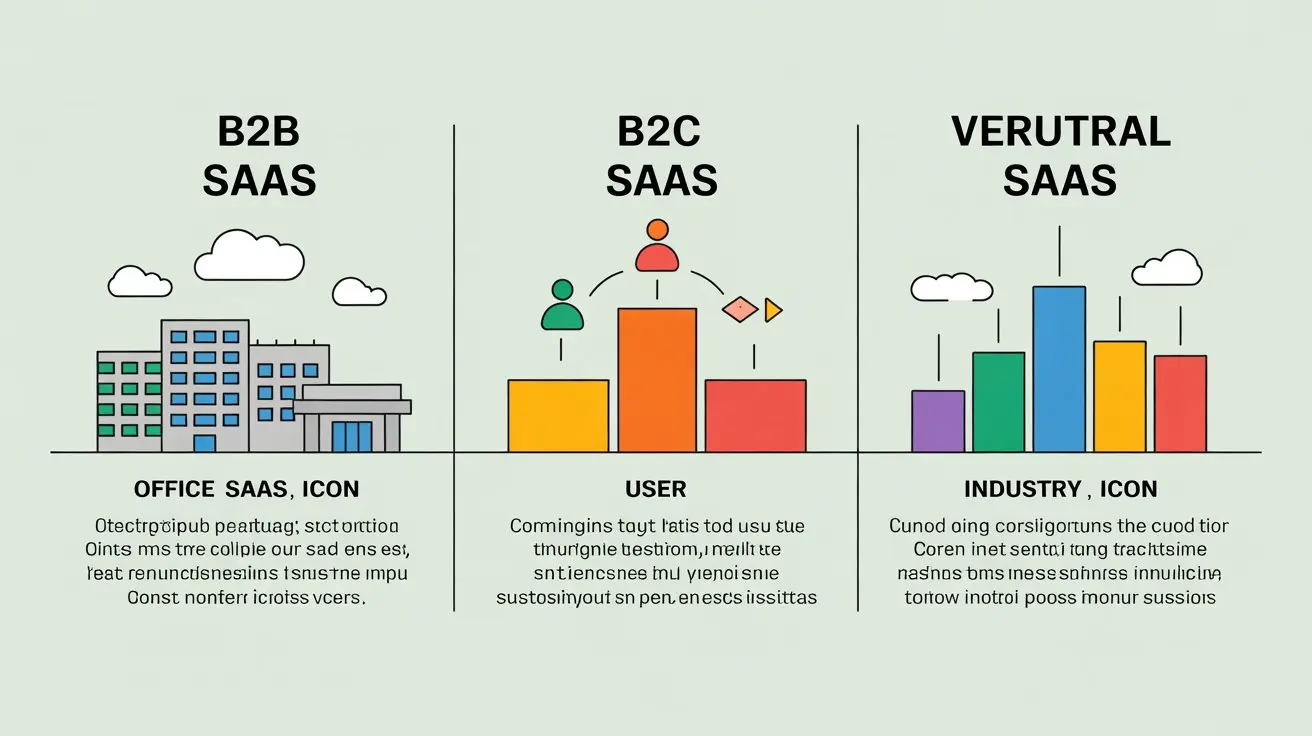
Not all SaaS Startups operate under the same business model; different types of SaaS Startups will use one of three business models; listed below.
B2B SaaS
B2B SaaS means ‘Business-To-Business’ and refers to any software designed to be used by a business. Some examples:
Examples
- HR Management Software
- CRM Software
- Marketing Automation Software
B2C SaaS
B2C SaaS means ‘Business-To-Consumer” and refers to any software designed for individual users of products and services offered by a company. Some examples:
Examples
- Fitness Apps
- Budgeting Apps
- Design Apps
Vertical SaaS
Vertical SaaS is software that is tailored to a particular industry, such as:
- Software solutions for dentists
- Systems for managing gyms
- Restaurant reservation systems
You can choose a business model based on the skills you possess and the audience you want to serve.
Best SaaS Startup Ideas for Beginners
For those new to the world of software as a service (SaaS) companies. Here’s a list of examples that have proven very successful.
AI-Based SaaS Tools
AI-based SaaS tools are in high demand, whether it is AI-based writing tools/image generators, or automation software.
Productivity Software
Management of tasks and team collaboration platforms fall under this category.
Small Business Accounting SaaS
Use an easy to use invoicing and bookkeeping solution.
Niche CRM Systems
CRMs tailored toward freelance workers, Coaches, or real estate professionals.
Micro SaaS
Micro SaaS are small SaaS programs that can be developed to fix one specific issue. You can create and operate a micro SaaS company more easily than larger SaaS applications.
Step-by-Step Guide to Starting a SaaS Startup
To successfully create your own Software as a Service (SaaS) Company, you need to know the necessary steps involved in building it out through planning and strategizing.
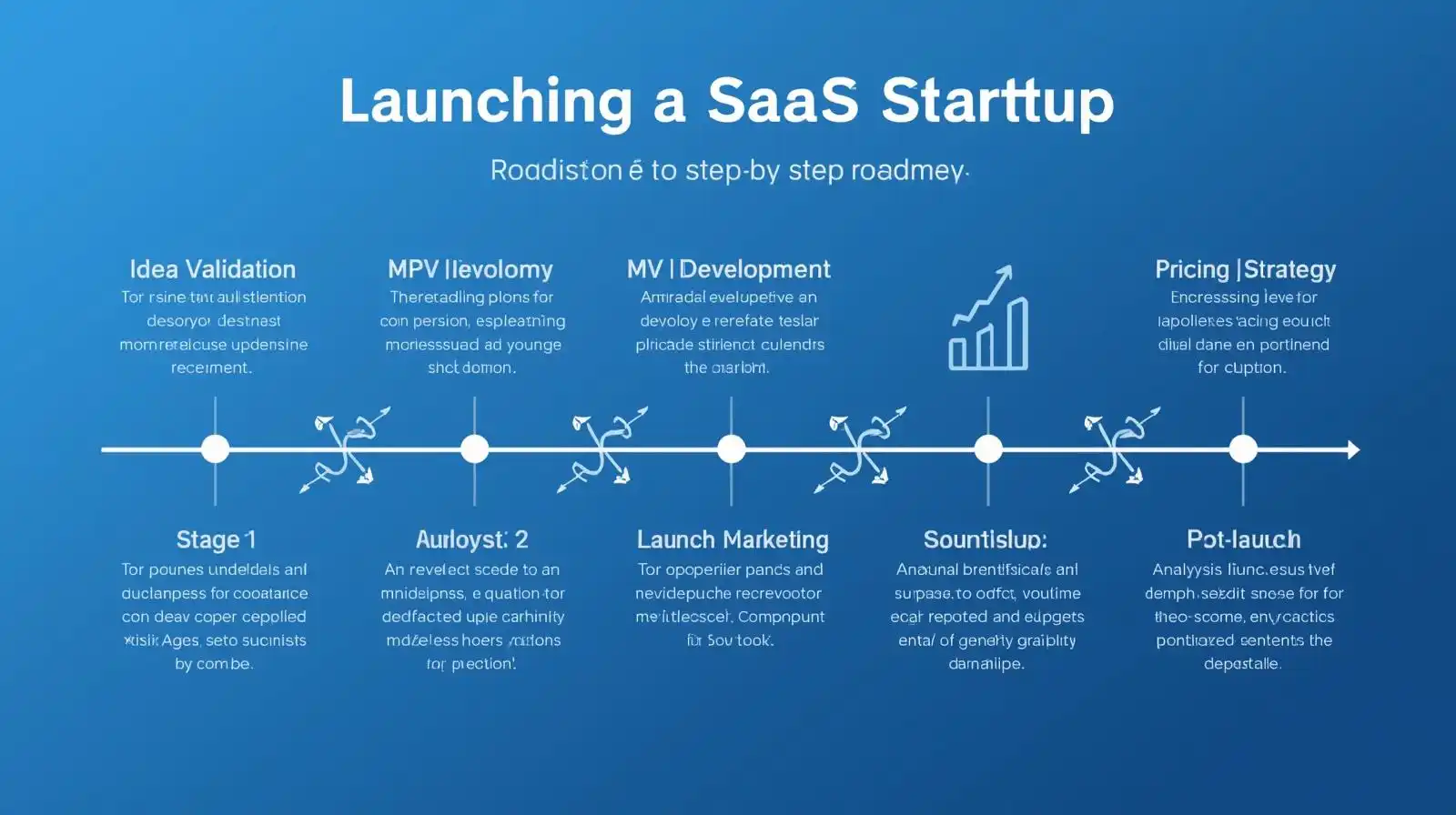
Step 1 – Identify a Real Problem
A piece of software needs to solve a real-world issue. It’s suggested that you conduct research within social media platforms like forums or Facebook groups and/or online communities to determine what frustrates individuals on those platforms and what everyday tasks could be automated.
Step 2 – Validate Your Idea
Avoid building immediately after identifying a problem;
- establish your landing page first
- gather email addresses of subscribers
- run small ads to gauge interest
- gather feedback from your attempts at startup validation by tracking their responses to see if they reflect the original problem you’re addressing.
Step 3 – Build an MVP
An MVP, or Minimum Viable Product, consists only of the most essential features.
Create something simple that can be built upon once developed.
Step 4 – Choose the Right Pricing Strategy
There are many different pricing strategies available, including:
- Monthly subscriptions
- Annual plans
- Freemium
- Tiered
- Enterprise
Your selected pricing strategy will influence your company’s growth, choose carefully when testing each strategy out.
Step 5 – Launch and Market
Employ the following methods of marketing;
- SEO and Content marketing
- LinkedIn outreach
- YouTube tutorial creation
- E-mail marketing
- paid advertisements
Be aware that marketing your company is as equally important, if not more important than developing your company.
How Much Does It Cost to Start a SaaS Startup?
The cost to set up a SaaS business also depends on how you create your product:
- Self-Coding: $500 – $2,000
- Hiring Developers: $5,000 – $50,000
- No Code Tools: lower cost; faster time to market
Benefits of Starting a SaaS Startup
The main benefits of running a SaaS business include:
- Repeating income
- Very High Lifetime Value of a Customer
- Scalable Infrastructure
- No Physical Inventory
- High Company Value
As a result of the repeatability of the revenue, many SAAS companies are valued at a higher multiple than traditional companies.
Skills Required to Build a SaaS Startup
While you do not have to be a developer to start a SaaS business, the following skills will be helpful:
- Technical Knowledge
- Ability to Research the Target Market
- Knowledge of Digital Marketing
- Developing a Customer Support Plan
- Financial Management
If you are not a developer, you may need to outsource software development.
Common Mistakes in SaaS Startups
- Building the product without validating the idea
- Creating too many features
- Not using customer feedback to improve the product
- Weak onboarding
- Lack of clear pricing strategy
SaaS Startup vs Other Business Models
Understanding how the SaaS business model differs from other business models is important to help you make the right decision about your business model option.
SaaS Startup
-
Recurring Revenue
-
Highly Scalability
-
Strong Long-Term Company Value
Product Business
-
Physical Products
-
Must Manage Inventory
-
Must Create Repeat Sale Strategy
Service Business
-
Low Start-Up Cost
-
Fast Initial Revenue
-
Must Have a Limited Capacity for Growth
To get a complete understanding of the various business model options, read our Profitable Business Model Guide to compare all three business model options.
Final Thoughts on Starting a SaaS Startup
When starting a Software as a Service (SaaS) Startup, if correctly developed, it can create long term value. You must have researched, executed properly and practiced patience.
Be sure that your solution is solving an actual problem.
Be consistent when checking with others if you should build your product.
Your product should be extremely easy to use.
Be sure that you are consistently marketing your company.
If executed properly, your SaaS Startup will be able to expand worldwide and generate recurring revenues indefinitely.